
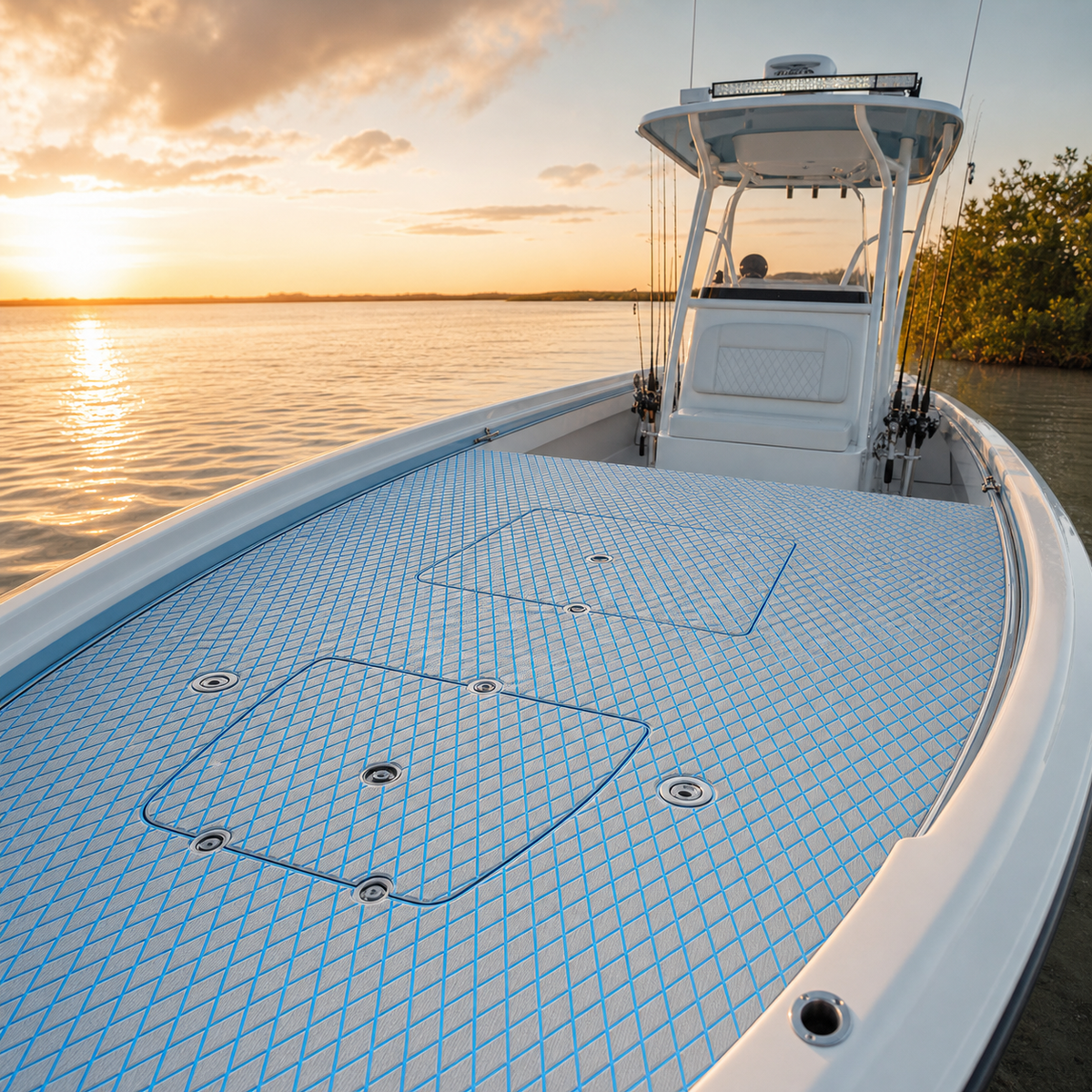
A bay boat may leave the ramp in cool morning air, cross open water under bright sun, idle beside a mangrove shoreline, and return after an afternoon shower. The deck experiences each change before the trailer is back in the parking lot. That makes flooring a planning decision rather than a simple color choice. Boat flooring for bay boats in changing weather should suit the boat’s layout, preserve essential access and drainage, and remain manageable through the owner’s real cleaning routine.
No flooring removes the need for careful movement or maintenance. Water, sunscreen, fish residue, sand, worn footwear, and loose gear can affect footing on any surface. Instead of looking for universal promises, use the boat itself as the brief. Map how weather reaches each deck zone, compare materials under the conditions you actually encounter, and confirm the current instructions for the exact option before ordering or installing it.
Start with a weather-and-use map
Bay boats often combine a raised casting deck, center console, open cockpit, storage lids, livewell access, and narrow movement routes along the gunwales. The same area may be dry at launch, wet after retrieving an anchor, and cluttered while landing a fish. Begin with a top-down sketch of the boat and mark what happens in each zone.
- Direct-sun zones: exposed bow and stern platforms, step surfaces, and areas not shaded by the console or top.
- Frequent-wet zones: boarding points, livewell surrounds, anchor routes, scupper areas, and places where gear comes aboard.
- Standing zones: the helm, casting positions, and locations where an angler works a line or prepares tackle.
- Movement routes: the path from bow to cockpit, turns around the console, and transitions between deck levels.
- Access zones: hatches, drains, fasteners, inspection plates, batteries, pumps, and removable hardware.
Add notes for the conditions that matter locally: sudden rain, salt spray, fine sand, muddy ramp shoes, leaf litter, strong sun, cool mornings, or long periods under a cover. This map keeps the project focused on real exposure instead of broad claims about a material category.
Inspect the deck before comparing flooring
Flooring should not be used to hide a problem. Empty the deck, clean it according to the boat builder’s guidance, and inspect the underlying surface in good light. Look for loose coatings, corrosion, cracks, movement, uneven repairs, standing water, sharp fasteners, and old adhesive. Check whether every hatch opens freely and whether water can still reach its intended drain.
If damage or the substrate is uncertain, pause before making templates. A qualified marine professional can help determine what needs repair and which preparation method is appropriate. A sound, understood surface gives you a useful starting point; an unknown surface turns every later decision into a guess.
Photograph the clean deck from above and at the level of each transition. Include close views of drains, hatch edges, console bases, seat mounts, and previous repairs. These images help when asking a supplier about compatibility for a specific product, and they provide a record of what must remain accessible.
Plan for sun without making lifespan assumptions
Sun exposure varies across a bay boat. The bow may receive uninterrupted light while a console-side strip remains shaded. Dark and light colors can also look different under midday glare, overcast skies, and evening light. Compare the actual candidate in representative conditions when possible, rather than relying only on a screen or showroom sample.
Do not convert a general label into a lifespan promise. Ask for current documentation that applies to the exact flooring choice, color, finish, and intended marine use. Confirm the care instructions and any storage recommendations. If the available information is incomplete, treat that as a decision factor instead of filling the gap with assumptions from another product.
Layout can help with visual comfort too. Keep boundaries clear around steps and changes in level. Check whether a pattern direction creates glare or visual confusion when viewed from the helm. A full dry fit in daylight can reveal issues that small digital previews will not.
Respect rain, spray, and drainage paths
After rain or spray, water needs a clear route off the working deck. Before covering any area, trace where water travels while the boat sits at its normal attitude. Note channels, scuppers, low points, hatch gutters, and openings that must remain unobstructed. Flooring panels should be planned around those features, not across them by default.
A textured surface may contribute to a traction-focused layout, but texture is not a guarantee. Standing water, cleaning residue, fish slime, sand, wear, and footwear all change how a deck feels. Evaluate the pattern together with drainage and housekeeping. Deep grooves may collect debris; a subtle texture may require different care. Obtain the current cleaning guidance for the exact option and decide whether it fits how you use the boat.
Seams and exposed edges also deserve attention. Avoid placing small filler pieces in busy pivot zones. Keep transitions visible, and make sure hatch lids, drains, and service panels remain separate when they need independent movement. The goal is a deck that still functions when weather turns wet, not merely one that looks continuous in a photo.
Account for temperature changes and movement
A boat may move from a cool shaded driveway to a hot ramp, or from open sun into a covered storage space. Materials, coatings, hardware, and the deck itself can respond differently to changing conditions. That is why installation instructions, environmental requirements, and substrate compatibility must be confirmed for the selected product rather than inferred from a general article.
During planning, leave operational clearance where the boat requires it. Test hatches through their full movement. Reinstall removable seats and equipment during the dry fit. Check that panel edges will not interfere with hinges, latches, inspection points, or hardware that may need future service. Do not cover required labels or identification information.
Use full-size templates for irregular areas. Mark the boat’s centerline, bow direction, neighboring panel, and every cutout. A verified boat feature is a better reference than the trailer, dock, or shoreline, which may not be level. Review the complete pattern direction before committing to placement.
Choose a care routine for mixed conditions
Bay-boat cleanup can involve salt residue, bait, fish scales, leaves, mud, sunscreen, spilled drinks, and sand. A flooring option is only practical if its care requirements match the time, water supply, tools, and storage conditions available after a trip.
Ask which cleaners, brushes, and rinsing methods are compatible with the exact material and finish. Do not assume a strong solvent, concentrated detergent, stiff brush, or pressure washer is suitable. Follow the supplier’s current instructions and test an unfamiliar method in a small, inconspicuous area when appropriate.
A sensible routine begins with removing loose debris, addressing residue before it dries, keeping drains open, and allowing the boat to dry before it is covered. Periodically inspect seams, exposed edges, hatch clearances, and areas around hardware. If something changes, investigate early rather than waiting for a small issue to spread.
Use one scorecard for every candidate
Compare flooring options with the same questions. This prevents an appealing pattern or a broad marketing phrase from outweighing practical fit.
- Does the option suit the verified substrate and current deck condition?
- Can the layout preserve every drain, hatch, fastener, label, and service point?
- Are seams and edges kept away from frequent turns and level changes where possible?
- Is the texture manageable with salt residue, sand, bait, and the cleaning routine you will actually follow?
- Does the color and pattern remain visually clear in sun, shade, overcast light, and evening glare?
- Are the current preparation, installation, compatibility, and care instructions clear for the selected SKU?
- Can normal equipment, seating, coolers, and storage operate without interference?
Record answers beside your weather-and-use map. If documentation is missing or a deck detail is uncertain, resolve it before purchase or installation. A clearly identified unknown is safer and more useful than a confident assumption.
Practical takeaway: make a four-condition dry-fit checklist
Your next step is to combine the deck template with four condition checks: bright sun, shade, wet deck, and post-trip cleanup. Review pattern visibility, access, drainage, edges, standing zones, and maintenance under each condition. Photograph the full dry fit, operate every hatch and removable component, and confirm the product-specific instructions before committing to the installation.
Focean can be one option in that comparison. Contact Focean with clean deck photos, templates or dimensions, substrate details, and notes about the conditions your bay boat regularly sees. Ask for current information for the specific design under consideration, then compare it against the same checklist used for every candidate.
Frequently asked questions
What matters most when choosing flooring for a bay boat?
Start with deck condition, drainage, access, movement routes, cleaning needs, and the exact product instructions. Appearance matters, but it should follow the functional map of the boat rather than replace it.
Can textured flooring eliminate slip risk on a wet bay boat?
No. No deck surface removes slip risk. Water, residue, sand, wear, footwear, and maintenance affect footing. Preserve drainage, clean spills and fish residue promptly, and move carefully in changing conditions.
Can one large panel cover hatches and deck transitions?
That is usually a poor assumption. Hatches, multiple deck levels, drains, and service points often need separate planning. Template each area and test full movement during the dry fit.
How should I compare sun and rain exposure?
Map where each condition reaches the deck, inspect the actual candidate in representative light when possible, and review current documentation for the exact product. Do not infer lifespan or performance from a general material description.
Ready to organize the project? Build the weather-and-use map, complete the four-condition dry fit, and contact Focean with the boat details when you are ready to discuss current flooring options for your bay boat.
Share:
Comfortable Boat Flooring for Aluminum Fishing Boats: A Practical Guide
Custom Boat Flooring for Cuddy Cabin Cockpits: A Layout Guide