
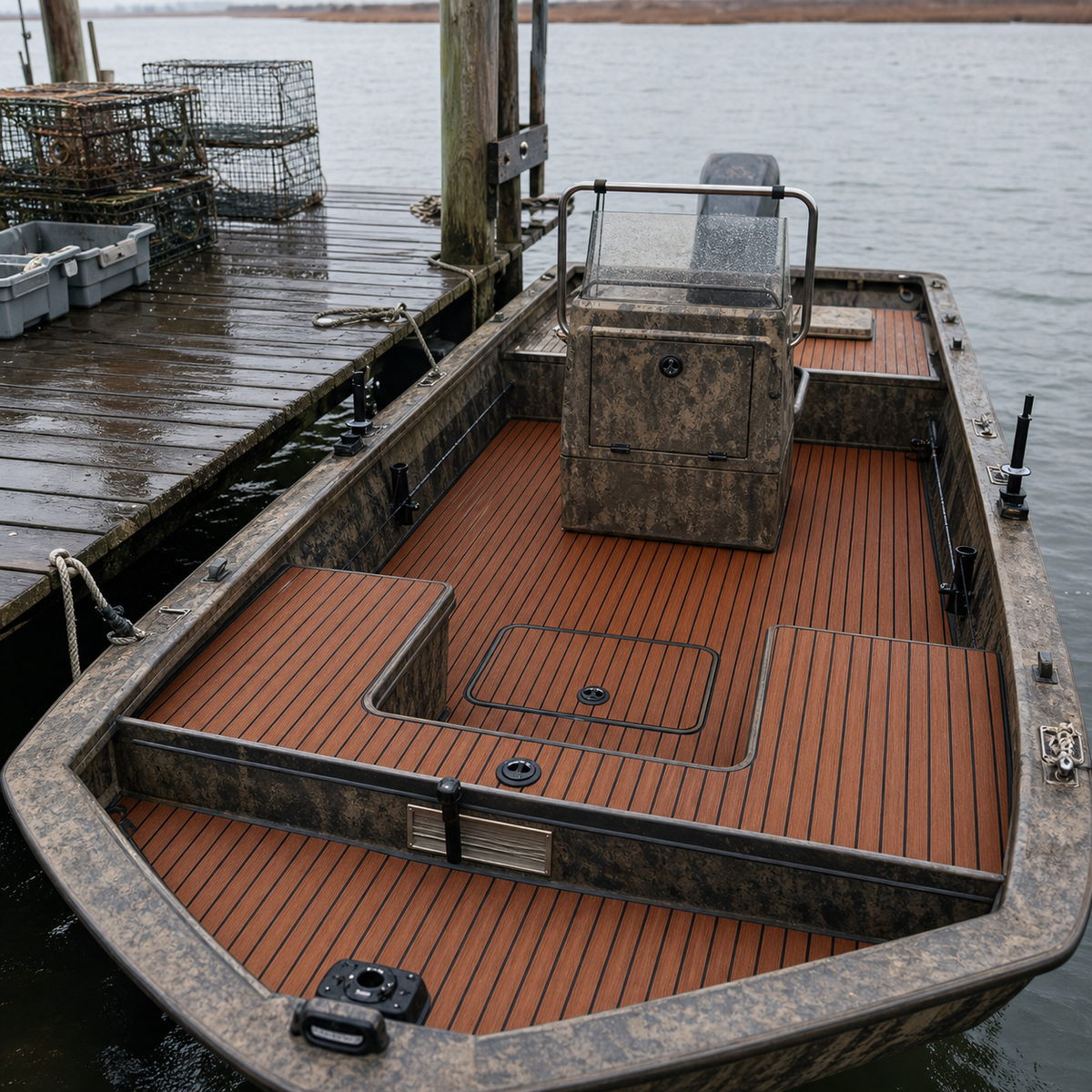
An aluminum fishing boat can feel wonderfully direct: a compact hull, an uncluttered casting deck, and gear close at hand. That simplicity also means the flooring has a large influence on how the boat feels during a long day. Anglers may stand in one position while casting, kneel beside storage, cross the same narrow route repeatedly, and work around wet equipment. Comfortable boat flooring for aluminum fishing boats therefore needs more than a pleasant first impression.
The useful question is not whether one material is universally “best.” It is whether a particular surface, layout, and installation plan fit your deck and the way you fish. This guide gives you a practical framework for comparing EVA foam and other flooring options while preserving drainage, access, stable footing, and easy upkeep. No deck surface removes risk: water, fish residue, mud, sunscreen, wear, and footwear can all affect traction.
Begin with your fishing routine, not a color chart
Before comparing materials, walk through a normal trip from launch to cleanup. Where do you step aboard? Where do tackle boxes, batteries, a cooler, or a landing net sit? Which area receives the longest periods of standing? A small aluminum boat often asks one piece of deck to serve several roles, so a single attractive product photo cannot answer these questions.
Draw a simple top-down map and mark five types of zones:
- Standing zones: casting positions, the helm, and places where someone watches a line or works a lure.
- Movement routes: the path between bow, seating, storage, and stern.
- Wet and messy zones: areas near a livewell, bait station, landing point, or gear that returns from the water.
- Access zones: hatches, battery compartments, drains, fasteners, inspection plates, and removable seats.
- High-contact edges: steps, thresholds, raised ribs, and narrow turns where a shoe may catch.
This map turns “comfort” into something you can evaluate. It reveals where cushioning may matter, where edges should be minimized, and where a removable or uncovered section may be more practical than full coverage.
Define comfort for the way you actually stand
Comfort is not simply the softest surface. A deck must still support balanced movement, stable gear, and predictable transitions. A surface that feels soft in your hand may behave differently under boots, bare feet, a cooler, or a pedestal base. Texture, compression, panel edges, temperature, and the amount of time spent standing all contribute to the experience.
When possible, evaluate a representative piece while wearing the footwear you use on the boat. Stand, pivot, and shift your weight rather than pressing the material with a thumb. Check whether the texture is irritating during kneeling, whether small objects sit steadily, and whether an edge is easy to notice. If several people use the boat, include their needs rather than assuming one person’s preference applies to everyone.
Color deserves a real-world check too. Dark and light surfaces can look very different in direct sun, shade, or early-morning glare. Compare the actual option beside the boat rather than relying only on a screen. The goal is a deck that remains visually clear around steps, hardware, and panel boundaries.
Work with the geometry of an aluminum deck
Aluminum fishing boats vary widely. Some have broad raised casting platforms; others retain exposed ribs, narrow benches, or a mostly open utility layout. Previous owners may also have added plywood panels, coatings, carpet, fasteners, or repairs. Treat the existing deck as an individual project, even if another boat looks similar.
Inspect the complete surface before planning panels. Look for movement, corrosion, sharp fasteners, loose coatings, trapped moisture, and uneven repairs. Flooring should not be used to hide a structural or drainage problem. If you find damage or uncertainty, pause and ask a qualified marine professional what should be corrected first.
Use full-size templates for irregular areas. Label the bow direction, neighboring panel, hatch opening, and every hardware location. A dry fit should allow you to open each compartment, remove seats, reach service points, and confirm that drains remain clear. Do not cover hull-identification information, required labels, safety equipment, or fasteners that may need inspection.
Evaluate texture without accepting absolute traction promises
A textured surface may support a traction-focused deck, but no texture makes an aluminum fishing boat slip-proof. Real conditions are too variable. Rain, lake water, fish slime, spilled drinks, sand, mud, cleaning residue, worn footwear, and algae can change how any flooring feels.
Look at both the pattern and the cleaning effort it creates. Fine texture may feel subtle underfoot, while deep grooves may hold more debris. Neither observation proves performance by itself. Ask for the current care instructions for the exact option, then consider whether those instructions match the messes your boat sees.
Panel layout also affects footing. Keep seams and exposed edges away from common pivot points where the deck allows. Avoid small filler pieces. Make level changes visible, preserve drainage paths, and treat spills or fish residue promptly. Good housekeeping and careful movement remain part of deck safety regardless of the selected surface.
Plan around hatches, ribs, benches, and hardware
A clean installation should respect the boat’s serviceability. Hatches need room to open without rubbing. Seat mounts, hinges, drains, cleats, and tie-down points must remain usable. On a deck with ribs or multiple levels, forcing one large sheet across every change can create awkward bridging or edges.
Break the layout into logical panels. Let important access lids remain separate. Use consistent reference lines based on the boat’s centerline or another verified straight feature, not the trailer, dock, or shoreline. Check pattern direction across the complete dry fit before committing to any placement.
Edges deserve special attention near the bow step, transom, bench bases, and pathways beside gear. A neat gap or intentional boundary is often preferable to a panel squeezed against hardware. Confirm clearance when components move, not just when they are closed.
Match the flooring to your cleanup habits
Fishing brings a specific mix of dirt: bait residue, scales, leaves, mud, sunscreen, spilled drinks, and water carried aboard by boots and equipment. A comfortable surface will become frustrating if its care requirements do not fit the time and tools you have after each trip.
Before choosing, obtain the current cleaning instructions for the exact material and finish. Ask which cleaners and tools are compatible. Do not assume a strong solvent, pressure washer, stiff brush, or concentrated detergent is appropriate. Test an unfamiliar method in a small, inconspicuous area and follow the supplier’s directions.
A practical routine begins with removing loose debris, addressing residue before it dries, preserving open drainage, and allowing the boat to dry before it is covered. Periodically inspect seams, exposed edges, hatch clearances, and areas around hardware. Early inspection can reveal a maintenance issue while it is still localized.
Compare candidates with one scorecard
Use the same questions for every flooring option so that one appealing pattern does not dominate the decision:
- Does it feel suitable while standing, pivoting, and kneeling in your usual footwear?
- Can the layout preserve every drain, hatch, fastener, label, and service point?
- Will edges and seams stay away from the busiest movement routes where possible?
- Is the texture practical for bait, mud, leaves, and the cleaning routine you will actually follow?
- Does the color provide clear visual boundaries in the light conditions where you fish?
- Are the substrate preparation, backing, compatibility, and care instructions clear for the selected SKU?
- Can seats, coolers, tackle storage, and removable equipment operate without interference?
Photograph the deck and keep notes beside your template. If a specification or instruction is unclear, request exact current information before ordering or installing. Avoid filling gaps with assumptions from a different product or boat.
Practical takeaway: build a standing-and-access map
Your most useful next step is a one-page map showing where you stand longest, where you turn, where water and fishing residue collect, and what must remain accessible. Add the footwear you normally use and your regular cleanup method. Then compare materials against that map, complete a full dry fit, and resolve any deck damage or compatibility question before installation begins.
Focean can be included in that comparison. Review the current information for the specific design you are considering, and contact Focean with clear deck photos, dimensions, substrate details, and your standing-and-access map to discuss current options. Confirm all product instructions and terms for the selected SKU rather than relying on general statements.
Frequently asked questions
Is EVA foam suitable for every aluminum fishing boat?
No. Suitability depends on the exact deck substrate, coatings, condition, geometry, drainage, access requirements, and the selected product’s instructions. Inspect the boat and confirm compatibility for the specific SKU before installation.
Will textured flooring prevent slips on a wet fishing deck?
No surface eliminates slip risk. Texture can contribute to a traction-focused layout, but contaminants, footwear, wear, maintenance, and standing water all affect footing. Keep the deck clean, preserve drainage, and move carefully.
Should I cover ribs and raised deck transitions?
Not automatically. Covering a shape without a suitable panel plan can create bridging, awkward edges, or interference. Template each level, keep transitions visible, and follow the exact product and installation guidance for the deck.
Can flooring go over an older coating or previous adhesive?
Do not assume it can. Existing coatings, residue, repairs, corrosion, and surface movement may affect preparation and compatibility. Identify the substrate and obtain appropriate guidance before bonding anything to it.
Ready to compare your options? Create the standing-and-access map, photograph the clean deck, and bring those details to Focean when asking about current flooring choices for your aluminum fishing boat.
Share:
EVA Foam vs. Marine Carpet for Sailboat Cockpits: A Practical Guide
Boat Flooring for Bay Boats in Changing Weather: A Planning Guide