
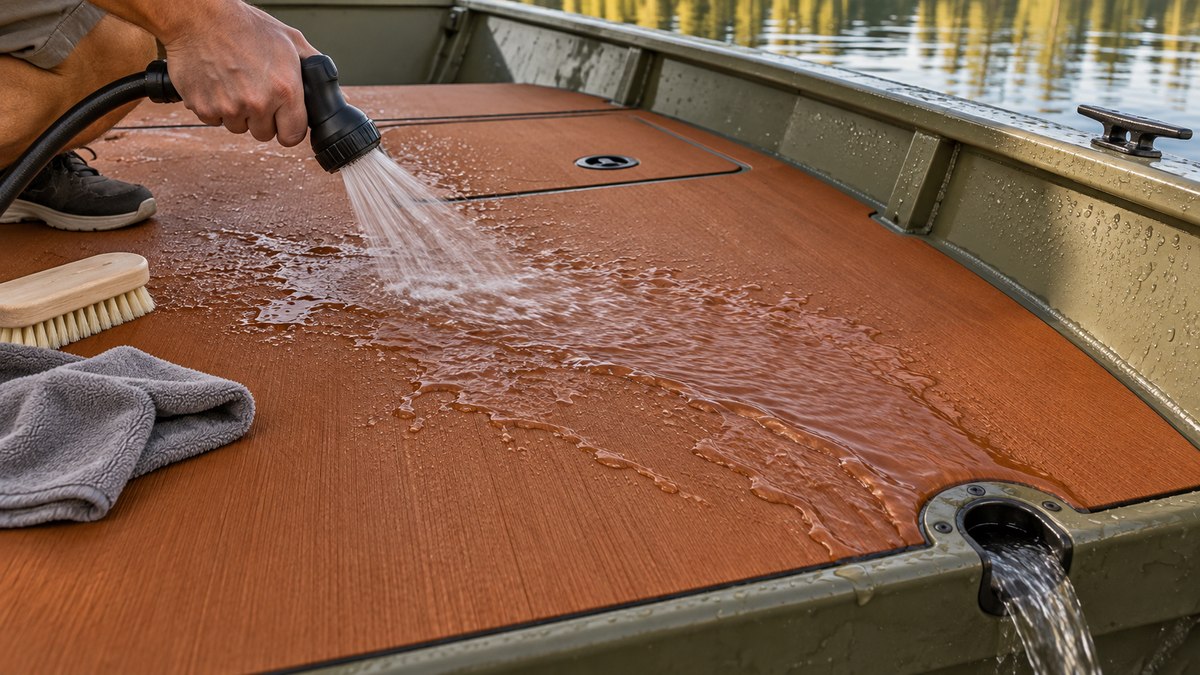
How to Clean Utility Boat Flooring After Hauling Gear
A utility boat can return with more than ordinary foot traffic on its deck. Buckets, rope, traps, toolboxes, coolers, portable tanks, wet clothing, muddy boots, and removable work equipment can leave separate cargo footprints, loose debris, water, and residue around hatches or ribs. Starting with a broad rinse may move that material into drains, seams, or service areas before you know where it came from.
A better reset begins with the load. This guide shows how to unload in a controlled order, identify what each cargo zone left behind, remove dry material first, use only an approved cleaning method, manage rinse water, and inspect the deck before reloading or storage. Always follow the current instructions for the exact boat, flooring, hardware, and cleaning products involved.
Photograph the loaded deck before moving anything
Take a few quick photographs before unloading. Capture the stern entry, the main work area, both sides of the console or bench, the bow cargo zone, and any hatch covered by gear. The goal is not to document a perfect deck. It is to record where heavy, wet, dirty, or sharp-edged items actually rested.
These photographs help you connect a stain, damp patch, compressed area, or hidden debris line with the object that occupied that space. They also reveal whether a box, tank, trap, or bag blocked a drain, hatch pull, inspection plate, or natural water path during the trip. That information can improve the next loading plan as well as the current cleanup.
Create an unloading lane and a quarantine area
Choose one clear route from the work deck to the dock, trailer, or staging area. Remove the cleanest and lightest items first so you do not carry dirt across surfaces that are already clear. Place muddy, oily, bait-contact, or heavily wet equipment in a separate outside zone rather than setting it back on the deck after removal.
Do not drag loaded containers across the flooring. Lift them when safe to do so, or follow the equipment maker’s handling guidance. Pause if an item is too heavy, unstable, leaking, or connected to fuel, electrical, or other boat systems. Cleaning the deck does not justify unsafe handling or disconnecting equipment without the correct procedure.
Read the cargo footprints before adding water
With the boat empty, divide the deck into small work zones. A cargo footprint can tell you what kind of first step is appropriate.
- Loose dry debris: leaves, grit, line fibers, packaging fragments, and dried mud should be collected before rinsing.
- Damp but unidentified residue: isolate the area and identify the likely source before choosing a cleaner.
- Food, bait, or organic material: remove solids without spreading them into grooves, hatches, or drains.
- Fuel, oil, battery residue, chemicals, or unknown liquid: stop ordinary cleaning and follow the applicable product, boat, facility, and disposal guidance.
- Pressure or edge marks: inspect the flooring, panel boundary, and underlying access area before placing the item back.
This classification is what makes the workflow different from a general post-cruise rinse. A utility deck carries changing loads, and each load can create a different cleanup problem. Treating every mark as ordinary dirt can spread a contaminant or hide a loading issue.
Remove dry debris from the clean side toward the dirty side
Use a tool permitted by the flooring’s current care instructions. Work from the cleanest visible zone toward the main debris collection point. Pay attention to the perimeter of boxes, beneath removable seats, beside ribs or sidewalls, around tie-down points, and along hatch frames. Dirt often forms a narrow outline where cargo blocked normal airflow or sweeping.
Collect the material instead of pushing it overboard or into a drain. Open only the access points that the boat’s normal procedure allows, and keep loose debris away from hinges, latches, wiring, pumps, and moving hardware. If a hatch was covered during use, inspect its gutter and opening before operating it.
Match the cleaning method to the exact residue
After dry pickup, consult the care instructions for the exact flooring and any cleaner you plan to use. Confirm permitted products, dilution, applicators, contact method, rinsing, and any test-area direction. A category label such as EVA foam does not establish one universal cleaning formula for every surface, backing, installation, or contaminant.
Begin with the smallest affected zone and the least aggressive documented method. Keep a separate cloth or applicator for each unknown or unusually dirty area so it is not carried across the deck. Do not combine cleaners, improvise with stronger chemicals, or treat an AI-generated image as proof of a safe method.
Control rinse water around drains, hatches, and service areas
Before rinsing, confirm how the boat is meant to drain in its present position. A self-draining work deck, a small hull with a low bilge area, and a trailer parked at an angle can move water very differently. Check the boat maker’s instructions and keep the established drain, scupper, pump, and plug procedures unchanged.
Use controlled amounts of water and watch the path continuously. Do not direct dirty water beneath fixed structures, through an open hatch, or toward electrical and service areas. If water begins pooling where it cannot be observed or collected, stop and address that route before continuing. Focean’s low-water jon boat cleaning guide gives a related workflow for a hull that may not drain freely.
Inspect every former cargo zone while it dries
Drying time is also inspection time. Look around panel edges, hatch frames, fasteners, tie-downs, seat or console bases, ribs, low points, and the footprints of removable equipment. Note any edge change, trapped debris, persistent dampness, damaged hardware, substrate concern, or area that cannot be inspected.
Leave appropriate access open only as permitted by the boat and equipment instructions. Remove wet towels and cleaning tools from the deck. Do not reload or cover the boat until the exact setup has received the drying and ventilation required by its current documentation. A surface that looks dry in the center can remain damp beneath a box footprint or beside a shaded edge.
Fix the loading pattern before the next trip
The cleanup should produce a better cargo map. Move an item if it repeatedly blocks a drain, hatch, travel lane, or inspection point. Give muddy or wet gear a defined temporary location. Keep containers that need frequent access away from moving lids, and preserve a clear unloading route.
For a broader comparison between a covered work deck and visible bare metal, review Focean’s work-skiff surface guide. The skiff work-and-boarding guide helps map cargo movement, standing zones, and access before changing a layout.
A cargo-first utility boat cleanup checklist
- Photograph the loaded deck and all covered access points.
- Establish one unloading lane and an outside dirty-equipment zone.
- Remove clean, light items before muddy, wet, or contaminant-risk gear.
- Classify each cargo footprint before choosing a cleaning method.
- Collect dry debris from clean zones toward one pickup point.
- Verify the exact flooring, cleaner, and boat-care instructions.
- Spot-clean with separate tools where cross-contamination is possible.
- Confirm the water route before using a controlled rinse.
- Inspect edges, hatches, drains, hardware, and low points while drying.
- Record a revised cargo map before reloading or storage.
FAQ
Should I hose down a utility boat before unloading it?
Usually, unloading and dry pickup should come first because gear can hide debris, block water paths, and carry material from one zone to another. The correct sequence still depends on the exact contaminant and the boat, flooring, equipment, and facility instructions. Stop ordinary cleaning when fuel, oil, battery residue, chemicals, or an unknown liquid may be involved.
How do I clean under removable work equipment?
Follow the equipment and boat instructions before moving or disconnecting anything. Once the item is safely removed, photograph the footprint, collect dry debris, inspect the flooring and access points, and use only a documented compatible cleaning method. Keep the area observable until it is appropriately dry.
Can I use the same routine after carrying traps, tools, or fishing gear?
The cargo-first sequence is useful, but the residue determines the method. Rope fibers, dried mud, bait material, grease, and unknown liquid should not automatically receive the same cleaner or disposal route. Identify the material, isolate the zone, and follow the applicable primary instructions.
Practical takeaway
Clean a utility boat in the same order the load leaves it: document, unload, isolate, collect dry debris, identify residue, clean small zones, control water, inspect, dry, and revise the cargo map. That sequence keeps hatches, drains, service points, and flooring edges visible instead of turning the entire deck into one mixed cleanup area.
Use Focean’s work-skiff buyer’s checklist when a future project needs cargo and access planning. For exact-item questions, contact Focean with clear deck photographs, the flooring or product details you can verify, the type of residue, and the boat’s drainage setup.
Share:
How Much of a Wake Boat Should You Cover With Flooring?
How to Install Bay Boat Flooring Around Livewell and Storage Lids