
How to Clean Fish-and-Ski Boat Flooring After a Mixed-Use Day
A fish-and-ski boat can change jobs several times in one outing. The bow may hold tackle and a landing net in the morning, the cockpit may carry passengers later, and the stern can become a wet boarding and tow-gear zone by afternoon. When the boat comes home, the flooring may hold a mixture of grit, plant fragments, fish residue, sunscreen transfer, snack crumbs, wet footwear marks, and water trapped around movable gear.
The useful cleaning question is not simply how to make the deck look tidy. It is how to unload, separate residue, clean around moving parts, preserve drains and access points, and reset the boat for its next mode. This guide gives you a practical sequence for sheet-material boat flooring without assuming one cleaner, brush, or method is correct for every product. Always follow the current care instructions for the exact flooring installed on your boat.
Start With a Two-Mode Unloading Map
Before adding water, divide the day’s equipment into fishing, tow-sport, passenger, and safety groups. Remove tackle bags, hooks, lures, line, bait containers, boards or skis, tow ropes, towels, coolers, removable cushions, and loose footwear. Put wet items on a washable surface away from dry tackle and upholstery.
This separation prevents the cleanup from becoming a second mixing event. A wet tow rope dropped across a tackle bag can move lake water and grit into compartments that were otherwise dry. A landing net placed on a clean seat can transfer plant fragments or residue to fabric. Give every group a temporary staging place before you begin.
If you are still planning how the boat should change between activities, use the fish-and-ski flooring zone guide to map the fishing, passenger, tow-gear, boarding, and access routes separately.
Do a Dry Pass Before a Wet Pass
Pick up line, hooks, soft-plastic pieces, food wrappers, and other sharp or easily missed objects by hand. Then use a soft brush, handheld vacuum, or another method allowed by the flooring maker to remove loose grit. Work from raised decks and seats toward the lowest open collection area rather than scattering debris from one zone to another.
Pay special attention to hatch edges, seat bases, the space beside the consoles, boarding steps, and the stern transition. These narrow boundaries collect residue while the broad center of the deck may look clean. Removing dry debris first also keeps loose dirt from turning into a gritty slurry when water is introduced.
Separate Fishing Residue From Recreation Residue
Different residue needs different first actions. Remove hooks and line before brushing. Lift fish scales or bait fragments instead of grinding them into the texture. Blot oily food or sunscreen transfer rather than spreading it. Shake grit from tow ropes and life jackets away from the deck. If plant material is present, collect it for appropriate disposal instead of rinsing it back into the water.
Do not guess at a strong chemical treatment because the residue looks difficult. Confirm the flooring maker’s current care guidance and test any allowed cleaner in a small, inconspicuous area. The exact surface, backing, nearby sealants, hardware, and boat finish all matter. A routine that is suitable for one installed system may not be suitable for another.
Clean the Boat in Functional Zones
A zone-by-zone sequence makes it easier to see what has been completed and prevents dirty water from crossing a cleaned area.
Bow casting deck
Open the tackle and anchor compartments only after loose hooks and line are controlled. Clean the fixed deck first, then each lid as an independent piece. Wipe around pulls, hinges, pedestal bases, and panel seams without forcing residue into the gaps. Keep water out of compartments that are not intended to be washed.
Cockpit and passenger area
Move removable items and slide or rotate seating only as the boat manufacturer allows. Check under seat edges, between consoles, and around cup holders or storage openings. Clean the main walking route before replacing coolers, bags, or cushions so you do not trap moisture or grit beneath them.
Stern wet-entry and tow-gear zone
The stern may combine wet feet, tow-rope handling, swim access, engine or service boundaries, and drains. Work outward from the cockpit toward the designated drainage path. Keep rope, hardware, and removable gear off the cleaned surface until both the deck and the equipment are ready to dry.
Use Controlled Water, Not a Flood
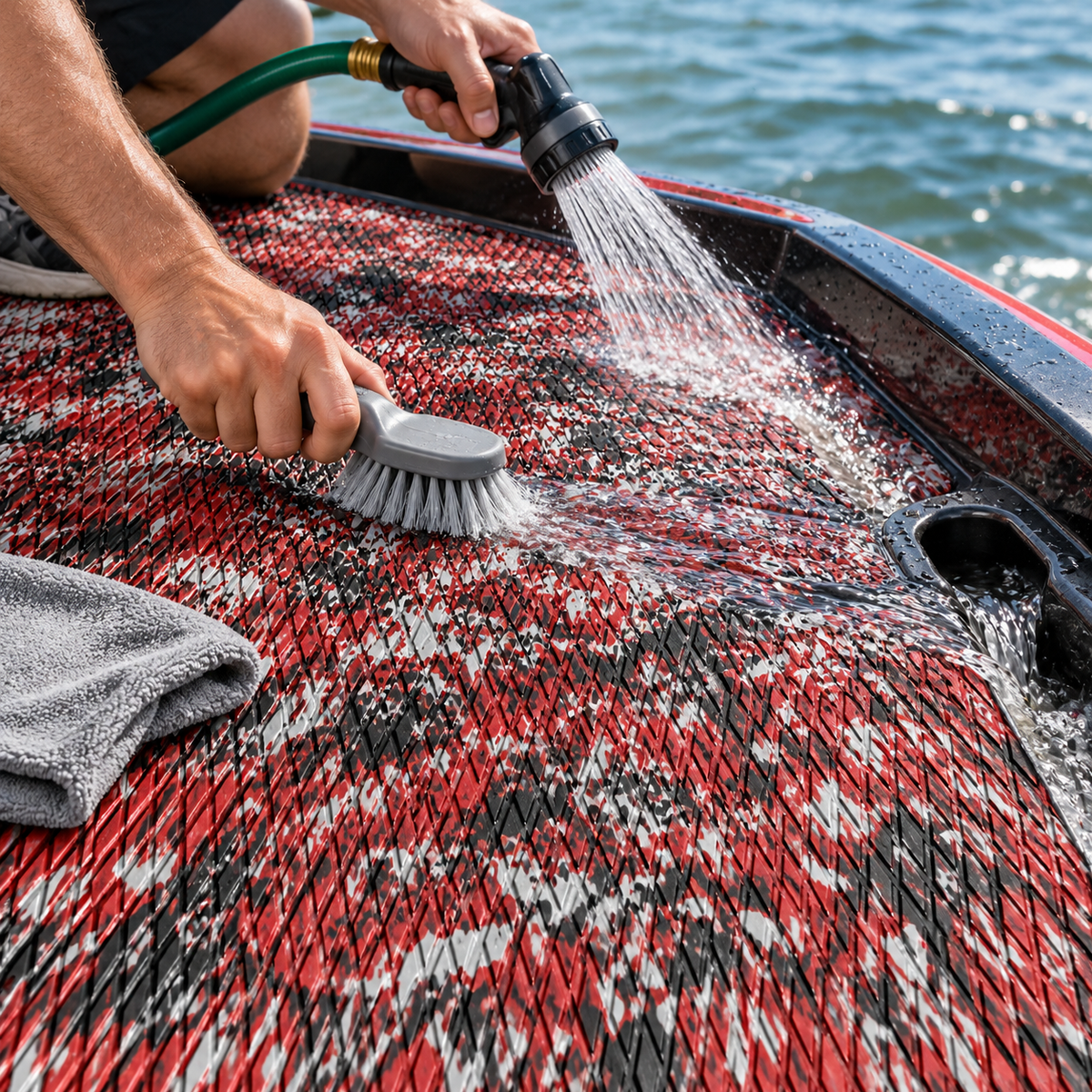
When rinsing is permitted, use only the amount of water needed to move loosened residue toward the boat’s intended drainage or collection point. Watch the path as you work. If water pools beside a hatch, seat base, threshold, or sealed compartment, stop and redirect the process rather than adding more water.
Keep a towel, wet vacuum, or other boat-appropriate collection method available for low spots. The goal is to remove dirty water, not move it under equipment or into inaccessible spaces. The deck boat drain and seat-base cleaning guide offers a related boundary-first method for these tight areas.
Inspect Moving Lids and Service Access
Open each hatch and storage lid separately after the surrounding deck is clean enough to handle. Check the panel edge, pull, hinge side, gutter or channel, and the fixed border around it. Remove trapped debris without directing it into the compartment. Confirm that the lid closes normally and that no towel, line, or cleaning tool remains in the opening.
Do the same around battery, pump, fuel, or engine-service access without disturbing systems you are not qualified or authorized to service. Flooring cleanup should preserve access, not turn into mechanical work. For a broader panel-by-panel method, see the bass boat casting-deck cleaning guide.
Dry the Deck and the Gear as Separate Systems
A clean deck can be covered too soon if the rest of the boat is still wet. Allow the flooring, hatch borders, drains, towels, life jackets, tow ropes, and removable gear to dry according to the applicable instructions and storage conditions. Keep compartments open only when it is safe to do so and the boat is protected from weather, children, pets, and unauthorized access.
Before replacing equipment, run a dry cloth around low edges and lift points. Check beneath movable gear rather than judging dryness from the center walkway. If the boat will be covered, confirm that wet items are not being sealed under the cover or returned to enclosed storage.
Reset the Boat for Its Next Use
Choose the next planned mode before reloading. For a fishing setup, restore tackle, net, and casting-deck access while keeping passenger and safety routes clear. For a recreation setup, stow fishing equipment securely, prepare the tow-gear zone, and confirm that boarding and cockpit routes are unobstructed.
Use a short reset checklist:
- all hooks, line, plant fragments, food, and loose residue removed;
- hatches, drains, seat bases, steps, and service boundaries inspected;
- deck and removable gear dry enough for the intended storage method;
- tow ropes, towels, life jackets, and tackle returned to separate places;
- every moving lid opens and closes without interference;
- the next activity’s walking, boarding, and equipment routes remain clear.
For a more gear-heavy unloading sequence, the utility boat cleanup guide explains how to separate cargo residue from the deck before washing.
Keep a Simple Post-Trip Record
After the boat is reset, note any recurring collection point, edge that stays damp, area hidden by normal gear, or residue that was difficult to remove. Photograph the location and record what activity preceded it. A repeated note can reveal that the solution is better unloading, a different storage position, a clearer water path, or an exact-product care question—not necessarily more aggressive cleaning.
Focean’s current boat flooring collection can be reviewed when you are comparing sheet-material options. Confirm the exact item details, compatible use, installation guidance, and care instructions shown for the product you are considering before ordering or cutting.
Practical Takeaway
Clean a fish-and-ski boat by reversing the day’s change of modes. Separate fishing and tow gear, remove dry debris, treat residue by type, work through the bow, cockpit, and stern as distinct zones, control the water path, inspect every moving lid, and dry the deck and gear separately. Finish by reloading for the next activity. The result is not merely a cleaner surface; it is a documented reset that keeps access points, drains, equipment, and movement routes ready for the way the boat will actually be used next.
Share:
Bold vs. Neutral Bass Boat Flooring: A Buyer’s Guide