
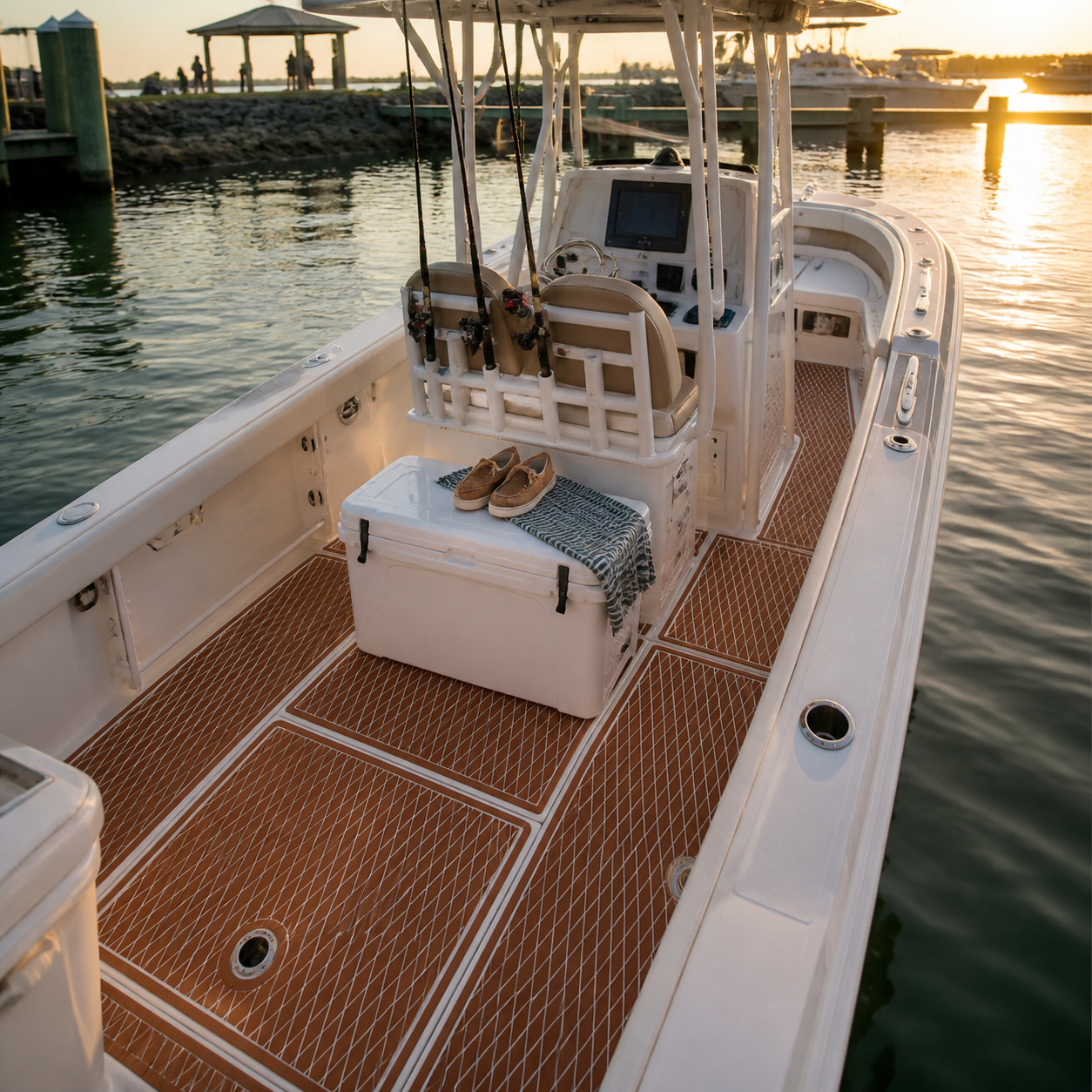
Choosing flooring for a center-console boat is less about finding one universally “best” material and more about matching the surface to the way the boat is used. A boat that spends most weekends fishing may need a different balance of comfort, cleanup, access, and visual continuity than one used mainly for cruising or sandbar trips.
Two common options are EVA foam flooring and marine vinyl. Both can create a finished deck, but they differ in feel, layout, edge treatment, care routines, and replacement planning. This guide compares those differences without assuming that either material suits every deck. Always confirm the construction, backing, compatibility, and current instructions for the exact product you are considering.
Start with the center-console deck, not the sample
A small material swatch can show color and texture, but it cannot explain how a flooring system will behave around a leaning post, console base, fish boxes, access plates, drains, hatch lids, and narrow side passages. Before comparing materials, map the actual working deck.
Photograph the cockpit from the stern and bow, then document each interruption. Open every hatch. Rotate latches. Identify removable panels and service access. Note where coolers, tackle, landing nets, and footwear regularly contact the floor. Also record areas where water or debris tends to collect.
This survey turns a vague flooring decision into a practical one. It reveals whether the project favors individually cut panels, a more continuous covering, or a combination of zones. It also highlights places where a seam, edge, or transition could interfere with normal use.
How EVA foam and marine vinyl differ
EVA foam boat flooring is commonly supplied as panels or sheets that are cut to match deck sections. Its cushioned feel and visible surface patterns are often central to the design. The finished result depends heavily on accurate templates, consistent pattern direction, careful alignment, and a compatible bond to the prepared deck.
Marine vinyl is usually considered as a flexible surface covering. Depending on the product and installation system, it may be laid over a broader area and finished at boundaries, corners, and transitions. The deck substrate, edge details, attachment method, and manufacturer instructions determine whether that approach is appropriate.
Neither description is a performance promise. Products within each category vary. The useful comparison is not “foam versus vinyl” in the abstract; it is one documented product system versus another on the exact surface of your boat.
Compare standing feel and deck use
Center-console owners often spend long periods standing at the helm, beside the leaning post, or near the transom. If underfoot feel is important, test each candidate while wearing the footwear normally used on board. Stand, pivot, kneel, and shift weight rather than judging by touch alone.
Texture also deserves a realistic check. A traction-focused surface can help with footing, but no flooring makes a wet or contaminated deck risk-free. Water, fish residue, sunscreen, wear, cleaning products, and footwear all affect traction. Compare the surface in conditions that reflect normal boating, and keep routine deck safety practices in place regardless of material.
Think about dropped tools and tackle as well. A softer-feeling surface may change how an object lands, while a more continuous covering may change how easily small items can be spotted or swept toward a collection point. These are workflow questions, not reasons to declare one material superior for every owner.
Study seams, edges, and access points
Panel-based EVA layouts make seams and pattern direction part of the visual plan. On a center console, align the strongest pattern line with the boat’s centerline or another clear reference. Avoid letting the layout drift around the console, where even a small change in direction can become noticeable.
Marine vinyl projects place more attention on perimeter finishing and transitions. Corners, steps, deck openings, and changes in substrate need a deliberate detail. Ask how the selected system should terminate and whether trim, wrapped edges, or another approved method is required.
For either material, do not cover drains, deck plates, fasteners, inspection points, or movable hatch gaps. Flooring should follow the boat’s service needs. If hardware must be removed, confirm the proper removal, sealing, and reinstallation procedure with the boat builder or a qualified installer.
Evaluate cleaning as a routine, not a slogan
Fishing creates a specific cleanup pattern: loose grit, bait residue, scales, spilled drinks, and sunscreen can all reach the cockpit. Compare how each candidate’s texture, seams, and edges affect that routine. A deeply patterned surface may need attention along grooves; a broad covering may still collect debris at boundaries or around hardware.
Ask the supplier for the current care instructions before choosing cleaners or brushes. The safe method depends on the surface, backing, adhesive system, deck finish, and type of contamination. Avoid assuming that a stronger chemical or more aggressive brush is automatically better. Test any approved cleaning approach in an inconspicuous area first.
Also inspect how water leaves the deck. Flooring should not redirect runoff into a compartment or create a new low point. During dry fitting, pour only as much clean water as is appropriate for a controlled drainage check, then verify that drains and channels remain open.
Consider repair and future access
A working fishing boat changes over time. Electronics may be added, a leaning post may be replaced, or a hatch may need repair. Ask what happens when one flooring area is damaged or when equipment beneath it needs service.
With a panel layout, a localized section may be visually separate, but matching an older color or pattern can still be difficult. With a larger continuous covering, the repair boundary may require more planning. In both cases, save the original templates, product identifiers, installation photos, and care instructions. Those records can make a later repair more controlled.
Do not assume removal will leave the substrate unchanged. The result depends on the deck finish, attachment method, age, exposure, and removal process. Ask for product-specific removal guidance and decide whether future service access should remain uncovered.
Compare appearance across the entire cockpit
EVA foam often makes pattern, panel borders, and routed-looking details visually prominent. Marine vinyl may create a quieter, broader field, depending on its color and texture. Review both options in the context of upholstery, console color, hull interior, hardware, and the amount of visible deck.
Use a full-deck sketch rather than choosing from a close-up image. Mark where patterns change direction and where transitions meet vertical surfaces. View the plan from the boarding point, helm, and bow walkway. A material that looks attractive in isolation may feel busy when repeated across several hatches, while a simple field may need careful edge details to look intentional.
Build a fair comparison checklist
Request the same information for each shortlisted system:
- Exact material construction and surface texture.
- Backing or attachment method and compatible deck surfaces.
- Template, cutting, seam, edge, and transition requirements.
- Current installation, setting, care, and removal instructions.
- How drains, hatches, deck plates, and service access should be handled.
- Current ordering terms and what is included with the selected option.
Record the answers beside photos of your deck. If a supplier cannot confirm compatibility for the actual substrate and finish, pause the project rather than filling the gap with a general assumption.
Practical takeaway
Choose EVA foam when a carefully templated panel layout, cushioned feel, and visible pattern are priorities and the selected system is compatible with the deck. Consider marine vinyl when a broader covering and its particular edge-finishing approach better fit the layout. Then test both choices against the same center-console realities: standing zones, fishing cleanup, drainage, hatch movement, service access, repair planning, and visual direction.
Focean can be part of that planning conversation without replacing the inspection. Prepare wide deck photos, close-ups of hatches and drains, substrate details, and a labeled sketch. Contact Focean with those verified details to discuss current EVA flooring options, and compare the resulting information with the exact marine vinyl system on your shortlist before deciding.
Frequently asked questions
Is EVA foam automatically better than marine vinyl for a fishing boat?
No. The better fit depends on the exact products, deck surface, layout, installation method, maintenance routine, and owner priorities. Compare current product documentation for the same use case.
Can either material cover hatch lids?
Potentially, but the flooring must not interfere with hinges, latches, gaps, seals, or safe access. Template lids separately and follow the instructions for the selected system and boat.
Which option is easier to clean?
That depends on texture, seams, edges, contamination, and the approved cleaning method. Review current care guidance and evaluate the real fishing mess your cockpit experiences.
Should I install flooring over existing material?
Do not assume that layering is compatible. Identify the existing surface and adhesive, inspect its condition, and follow product-specific preparation instructions. Seek qualified guidance when the substrate is uncertain.
Share:
How to Install EVA Foam Boat Flooring Around Bass Boat Hatches
Comfortable Wake Boat Flooring: A Cockpit Planning Guide