
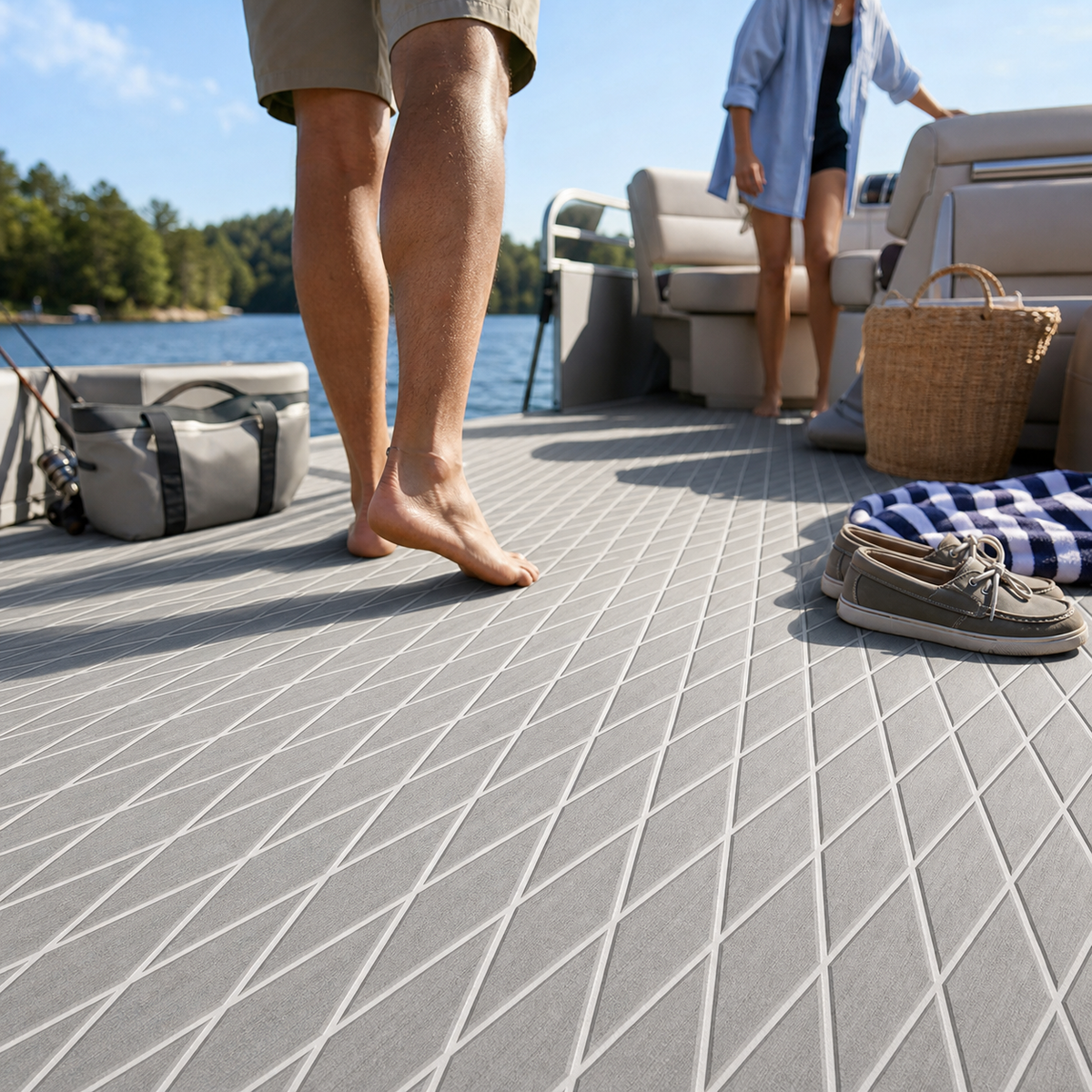
A pontoon deck does several jobs in the same afternoon. It may be a boarding area, a walkway, a snack station, a fishing platform, and a place to stretch out after a swim. That mix of movement makes flooring selection less about a single attractive pattern and more about how the whole deck works. Comfortable pontoon boat flooring should support everyday traffic, fit around furniture and access panels, and remain practical to clean.
This guide explains how to compare EVA foam flooring and other deck-surface options without relying on universal promises. Traction changes with water, sunscreen, fish residue, footwear, wear, and maintenance, so no flooring makes a deck risk-free. The useful goal is a thoughtful layout, a suitable surface, and routines that reduce avoidable problems.
Start with the way your pontoon is actually used
Before looking at colors, sketch a typical day on the boat. Mark where people board, where bags land, where coolers slide into place, and which route connects the gate, helm, seating, and swim ladder. A cruising pontoon with frequent barefoot traffic has different priorities from a fishing-focused setup with tackle boxes, chair bases, and wet gear.
Divide the deck into practical zones:
- Boarding zones: gates, dock-side steps, and the area where passengers pause while loading.
- Traffic lanes: the clear paths between seats, the helm, storage, and the stern.
- Activity zones: fishing positions, tables, coolers, and open lounging space.
- Wet zones: swim-ladder approaches and places where towels or water toys collect.
- Service zones: hatches, fuel access, pedestal bases, drains, and removable panels.
This map gives you a better decision framework than shopping from a single beauty photo. It also reveals where seams, edges, and transitions deserve extra attention.
Evaluate comfort without confusing softness with suitability
EVA foam is often considered for pontoon decks because a resilient surface can feel more forgiving underfoot than a hard bare deck. But comfort is not just softness. A surface that compresses too easily for the intended use, interferes with a hatch, or creates awkward transitions may be frustrating even if it feels pleasant during a quick touch test.
Compare candidates while standing, turning, and walking in the footwear you normally use. If possible, test a representative piece on a clean, stable surface rather than judging it in your hand. Consider how the texture feels against bare feet, whether chair legs and coolers sit steadily, and how the surface behaves near narrow passages.
Color also affects the experience of the deck. Instead of assuming that a particular shade will always feel cooler, compare physical samples under the light conditions where the boat is stored and used. Local sun exposure, surrounding colors, and surface finish all shape the result.
Look for traction-focused design, not absolute claims
Texture and grooves can contribute to a traction-focused deck, but they do not remove the need for careful movement and regular cleaning. Water alone is not the only concern. Sunscreen, soap, spilled drinks, mud, algae, and fish residue can change how any surface feels underfoot.
Inspect the texture at both normal viewing distance and close range. Deep or complex grooves may look distinctive, yet they can also hold debris. Very subtle texture may be easier to wipe but should still be evaluated in realistic conditions. Ask the supplier how the selected SKU should be cleaned and what products should be avoided.
Layout matters as much as texture. Avoid placing a raised edge where passengers naturally pivot, step through a gate, or approach a ladder. Keep drains and deck hardware functional. After installation, treat standing water or contamination as something to address promptly rather than proof that the flooring has failed.
Plan around gates, furniture, and deck access
Pontoons contain many interruptions: seat bases, consoles, table mounts, gates, rails, hatches, and storage lids. A clean panel map helps the flooring look intentional and makes future service easier. Begin with a measured deck drawing and identify every component that must open, rotate, drain, or be removed.
Use full-size templates for irregular sections. Label each template with its orientation and neighboring panel. Dry-fit the complete set before removing any backing or applying adhesive. Open every hatch, swing every gate, and test removable furniture while the templates or panels are still easy to adjust.
Do not cover fasteners, drains, inspection points, identification plates, or safety equipment. If an access point might require service later, design a separate removable section or a clean boundary around it. Confirm that edges will not interfere with door clearances or create a catch point beside a busy walkway.
Think carefully about seams and transitions
A pontoon deck is visually broad, so panel alignment is easy to notice. Choose a reference line that relates to the boat rather than the dock, trailer, or nearby scenery. The centerline, a long seat base, or a straight structural edge may provide a useful guide, but verify it against the complete layout.
Where panels meet, aim for consistent spacing and pattern direction. Avoid tiny filler pieces that are hard to align and easy to disturb. Place transitions away from the highest-turning areas when the deck geometry allows it. At a material change, check that the height difference is comfortable to cross and clearly visible.
Curved corners and neat edge spacing can help a layout look deliberate. They also reduce the temptation to force a panel into a shape that does not match the deck. A patient dry fit is more valuable than trying to correct a rushed layout after bonding begins.
Choose a cleanup routine before choosing the surface
Flooring is easier to live with when its care needs match your habits. Think about the messes your boat actually sees: lake water, sand, leaves, bait, snacks, sunscreen, or muddy shoes. Ask for current care instructions for the exact material and finish you are considering.
A practical routine usually starts with removing loose debris before it is ground into the texture. Address spills early, use only compatible cleaners, rinse when appropriate, and allow the area to dry before covering the boat. Do not assume that a stronger cleaner or stiffer brush is better. Test any unfamiliar method in a small, inconspicuous area first.
Pay special attention to seams, furniture edges, and the route between the swim ladder and seating. These areas can collect moisture or residue because they receive frequent traffic. Periodic inspection also gives you a chance to notice lifted edges, trapped debris, blocked drainage, or damage before it expands.
Use a realistic comparison checklist
When comparing pontoon boat flooring, score each candidate against the same questions:
- Does the surface feel comfortable during standing, turning, and normal walking?
- Is the texture practical for the water, gear, food, and fishing messes your deck sees?
- Can the layout preserve every hatch, drain, gate, and service point?
- Will seams and edges stay away from obvious pivot and boarding points where possible?
- Are cleaning instructions clear for the exact material and finish?
- Can you confirm backing, thickness, compatibility, and current terms for the selected SKU?
- Does the color work with the boat in real daylight rather than only on a screen?
Keep notes and photos for each option. A simple comparison prevents one striking pattern from overshadowing practical concerns.
Practical takeaway: map the deck before you shop
The best first step is not ordering flooring. It is creating a one-page deck map that shows traffic lanes, wet zones, access panels, and furniture clearances. Add your three most common messes and the footwear passengers usually wear. Then use that map to compare materials, request current instructions, and plan a full dry fit.
Focean can be one option in that comparison. Review the current listing for the specific design you are considering, confirm compatibility and care requirements, and bring your deck map to any conversation with the supplier or installer. A good decision is one that fits the boat, the crew, and the way the pontoon is used.
Frequently asked questions
Is EVA foam suitable for every pontoon boat?
No material should be assumed to suit every boat. Deck substrate, existing coatings, moisture, hardware, access needs, and the selected product's backing all affect compatibility. Confirm the requirements for the exact SKU and deck before installation.
Does textured pontoon flooring prevent slips?
No surface can eliminate slip risk. Texture may support a traction-focused design, but water, contaminants, footwear, wear, and maintenance affect traction. Keep the deck clean, address spills, preserve drainage, and move carefully in wet areas.
Should pontoon flooring cover the entire deck?
Not automatically. Full coverage may create a unified look, while a zoned layout can simplify access or emphasize busy areas. The better choice preserves gates, hatches, drains, fasteners, and service points without awkward edges.
How should I choose a flooring color?
Compare physical samples with the upholstery, rails, and deck in the light where the boat is normally used. Consider glare, visible dirt, pattern scale, and how clearly edges and level changes can be seen.
Ready to plan your deck? Explore Focean's current boat-flooring information, then use the zone map and checklist above to prepare questions about fit, backing, thickness, care, and current terms for your selected SKU.
Share:
EVA Foam vs. Marine Vinyl for Skiffs: A Practical Flooring Guide
Boat Flooring for Cabin Cruiser Cockpits: A Weather-Ready Planning Guide