
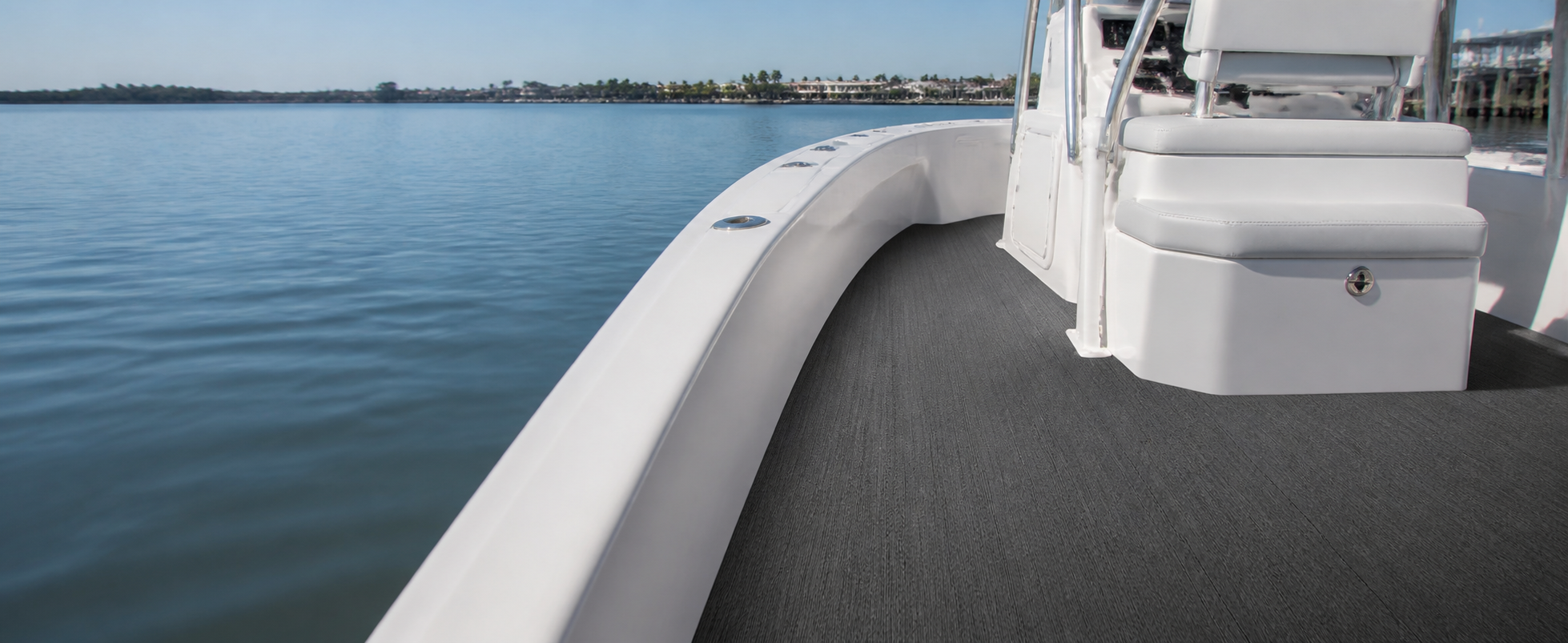
Comfortable center-console boat flooring starts with a simple observation: people do not use every part of the deck in the same way. The helm is a long-standing zone. The cockpit is a working zone. Side passages are movement zones, and the stern may alternate between boarding, fishing, rinsing, and gear handling. A good flooring plan responds to those differences without turning the deck into a patchwork.
This guide explains how to map those zones before comparing surface options. It focuses on layout, footing awareness, cleaning, drainage, and service access rather than promising that one material solves every problem. Product construction and instructions vary, so verify the exact specifications, compatibility, care guidance, and current terms for the option you are considering.
Begin with how the boat is actually used
A center-console may serve as a fishing platform one day and a family cruiser the next. Before choosing a color or pattern, write down the three activities that take up the most time aboard. Then note where each activity happens.
- At the helm, consider stance, seat movement, throttle access, and the path to the console door.
- In the cockpit, map coolers, tackle, rod handling, deck hatches, and washdown routines.
- Along the side passages, look for narrow steps, handhold locations, and transitions around the console.
- At the bow, identify casting positions, seating changes, anchor access, and storage lids.
- At the stern, consider boarding, ladders, engines, livewells, and areas that stay wet longer.
This activity map is more useful than a generic label such as “high traffic.” It shows where cushioning may be valued, where edges need protection from gear movement, and where a simple cleaning path matters most.
What “comfortable” should mean on a working deck
Comfort is not just softness. On a boat, it also includes a layout that feels predictable underfoot, keeps access points obvious, and avoids awkward edges in common walking lines. A surface can feel pleasant during a short showroom visit yet become distracting if pattern direction is visually busy, panels interrupt a natural stance, or a raised transition catches shoes.
Think about comfort as a group of practical questions:
- Can people stand where they naturally work without straddling a seam or narrow filler strip?
- Are the main walking routes visually clear from bow to stern?
- Can hatches and service panels open without rubbing against a new edge?
- Will water and debris have an obvious route toward drains rather than collecting at borders?
- Can the owner clean the surface with a routine that fits the boat's normal storage and use?
These questions apply whether the selected surface is EVA foam, another marine flooring system, or a combination of original deck and targeted mats.
Plan the helm as a standing zone
The helm deserves its own sketch. Mark the wheel, throttle, footrest, seat pedestal, console door, and any removable access panels. Then stand in the normal operating position and outline the space your feet actually use. The resulting shape may be wider or more angled than expected.
If you are considering a patterned foam surface, decide whether lines should follow the centerline, the console, or the visual direction of the cockpit. Consistency usually looks calmer than changing direction around every fitting. Avoid placing a tiny panel or thin strip where the operator repeatedly pivots.
Do not treat texture as a safety guarantee. Water, sunscreen, fish residue, dirt, footwear, wear, and surface care all affect traction. Keep the helm clean, use available handholds, and move with normal caution when the deck is wet.
Keep cockpit work zones easy to reset
The cockpit often sees the greatest mix of standing, kneeling, coolers, tackle, bait, hoses, and loose gear. A comfortable plan should make the end-of-day reset straightforward. Photograph the cockpit before moving anything, then photograph it empty. The difference reveals which objects are temporary and which fittings must remain permanently accessible.
Draw panel boundaries around natural features such as hatch outlines, console bases, seat modules, or deck breaks. Random seams across an open working area can make the layout look unsettled and add more edges to monitor. If a single large panel would complicate future service, divide it at an intentional line rather than at the most convenient cutting point.
Also consider where dirty water moves during cleaning. A flooring plan should not cover drains, create hidden pockets around hardware, or make it difficult to inspect the substrate. Follow the selected product's installation and care instructions, and resolve loose fasteners, contamination, soft areas, or old adhesive before adding a new surface.
Design side passages for movement, not decoration
Side passages around a center console are narrow compared with the cockpit. They connect major work areas and may be used while the boat is moving. Keep their layout visually simple. Long pattern direction or clean panel alignment can reinforce the path, while too many small shapes may make the space feel busier.
Check clearances at console doors, storage openings, hinges, latches, and removable cushions. Photograph each transition from standing height and from deck level. The lower view often reveals an edge, fastener, or drainage channel that disappears in a top-down template.
Where the passage narrows, avoid assuming every visible sliver needs flooring. A deliberate border can look cleaner than a fragile filler piece. Exact minimum widths and edge treatments depend on the product, so confirm them with the supplier or installer rather than inventing a rule on the dock.
Treat bow and stern as different environments
The bow may alternate between seating, casting, anchor work, and storage access. The stern may handle boarding, wet feet, engine checks, livewell use, or heavy coolers. Combining both areas under one generic “deck” label can hide important differences.
At the bow
Open every hatch and move every convertible seat before templating. Mark hinge arcs, latch access, pedestal bases, and anchor compartments. If a fishing stance matters, map where feet land rather than centering the design only on the boat's geometry.
At the stern
Observe drainage after normal boarding or rinsing. Note where water lingers and which edges receive repeated contact from shoes, ladders, hoses, or gear. Preserve access to inspection points and mechanical spaces. No new flooring should make routine checks harder.
Use a comfort-and-access scorecard
A short scorecard keeps the buying decision grounded. Rate each candidate surface from one to five for the following items, using only information you can verify for that exact option:
- feel during the boat's longest standing tasks;
- fit around hatches, doors, drains, and hardware;
- clarity of the proposed panel and pattern layout;
- compatibility with the identified substrate;
- cleaning steps under the maker's current guidance;
- ability to inspect and service the deck later; and
- appearance under the boat's real lighting and color scheme.
Do not award points for an unsupported claim or a feature that belongs to a different model. If the listing is unclear, ask for product-specific documentation before deciding.
Practical takeaway: build a five-photo flooring brief
Before contacting a supplier, assemble a one-page brief with five labeled photos: helm stance, empty cockpit, port passage, bow access, and stern drainage. Add a top-down sketch showing every hatch, drain, pedestal, console door, and service panel. Include the substrate type if known, the boat's normal use, the typical cleaning routine, and any areas that must remain removable.
This brief gives a flooring conversation a practical starting point. It also helps reveal whether the project needs a full-deck plan, selected comfort zones, or more substrate work before any surface is chosen.
Frequently asked questions
Is EVA foam automatically comfortable for every center-console boat?
No. Owners often consider foam when they want a cushioned surface, but comfort depends on the exact product, layout, installation, footwear, activity, and condition of the underlying deck. Verify the chosen option rather than applying a category-wide assumption.
Should every open deck area receive the same flooring?
Not necessarily. A consistent visual plan is useful, but some owners may prioritize the helm and cockpit while preserving original surfaces elsewhere. Any mixed layout should have intentional boundaries and should not obstruct drainage or access.
How can I evaluate footing when the deck is wet?
Do not rely on absolute wording. Review product-specific information, keep the surface free of contaminants, consider the footwear normally used aboard, and move carefully. Water, residue, wear, and maintenance can change traction.
What should I verify before ordering?
Confirm the exact product's construction, dimensions, backing, substrate compatibility, installation instructions, cleaning guidance, current availability, and current sales terms. Ask how templates, edges, seams, removable panels, and future service access should be handled.
When evaluating a Focean option, review the exact listing under consideration, verify its details and instructions, and contact Focean with your five-photo brief and product-specific questions before ordering.
Share:
EVA Foam vs. Marine Carpet for Pontoon Decks: How to Choose by Zone
Boat Flooring for Cabin Cruisers in Changing Weather: A Planning Guide