
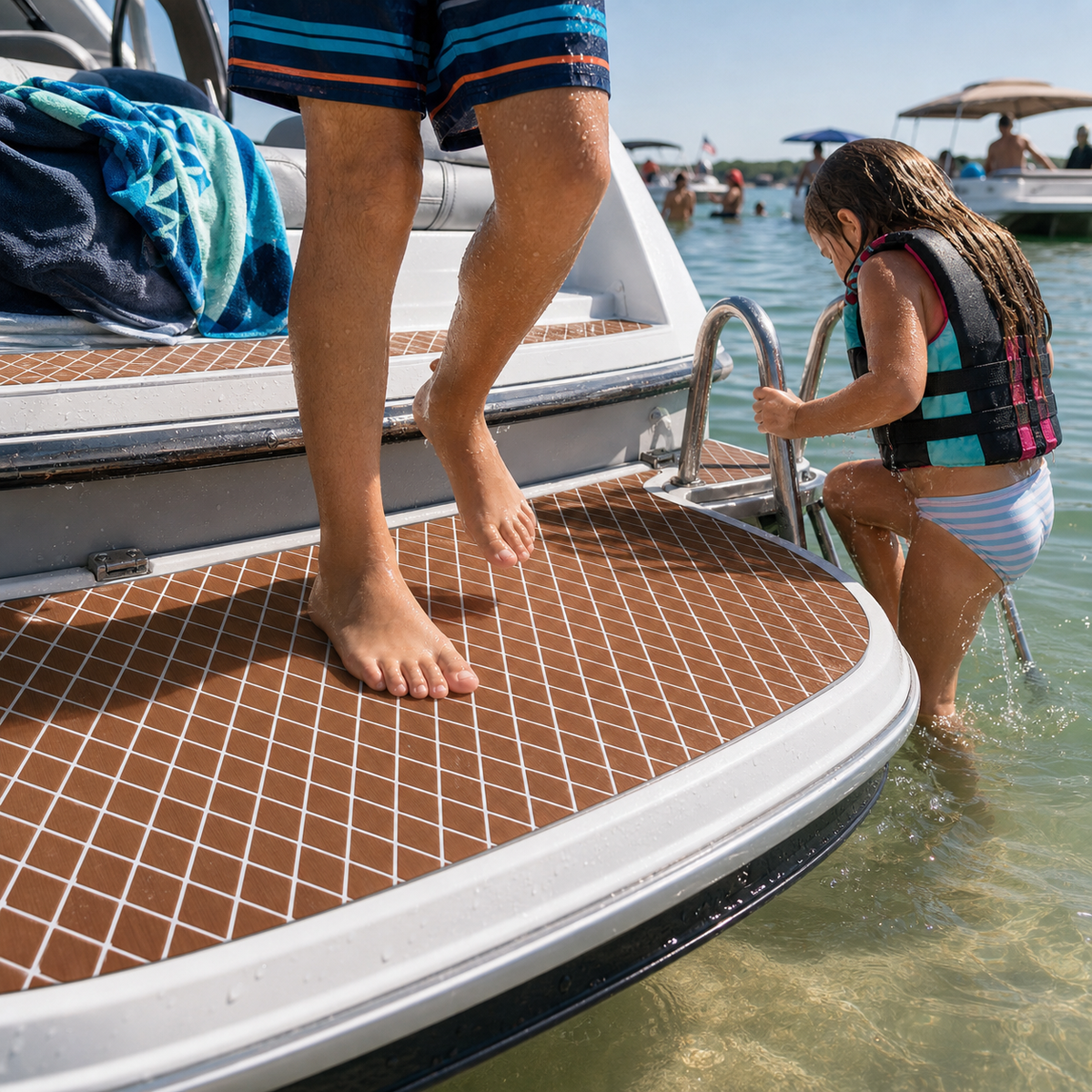
A wake boat can go from spotless to chaotic in one afternoon. Riders climb aboard with wet feet, boards drip across the swim platform, tow ropes bring lake water onto the deck, and sunscreen or snacks find their way into textured flooring. The best response is not a harsh end-of-season scrub. It is a short, repeatable cleanup that starts before residue dries.
This guide explains how to clean EVA foam flooring on a wake boat after a normal day on the water. It focuses on the traffic pattern that makes these boats different: repeated boarding at the stern, wet gear moving through the cockpit, and a tight turnaround between unloading and covering the boat. You will also learn when to pause and check the flooring maker’s instructions instead of guessing with a stronger chemical.
Why wake-boat cleanup needs its own routine
Wake sports concentrate most of the mess in a few areas. The swim platform receives wet feet, boards, ropes, and lake residue. The path from the stern into the cockpit collects drips and grit. Seating bases, cooler areas, and storage hatches catch crumbs, sunscreen, and moisture that are easy to miss during a quick rinse.
EVA flooring adds another consideration: its grooves and routed pattern can hold fine debris even when the deck looks clean from standing height. Installed panels also have seams, perimeter edges, and cutouts around hardware. A useful routine should clean the visible surface without directing aggressive water pressure into those details.
Build a simple wake-boat deck kit
Keep the kit small enough that you will actually bring it to the ramp or dock. A practical setup includes:
- A low-pressure hose nozzle or a bucket of fresh water
- Mild soap used according to its label
- A soft-bristle deck brush and a smaller soft hand brush
- Clean microfiber towels or absorbent cloths
- A rounded plastic scraper for dried, raised debris
- A small bag for trash, line scraps, and food wrappers
Before using any cleaner beyond mild soap, read the instructions for your exact flooring and test the product on an offcut or an inconspicuous area. A cleaner described as suitable for boats may still be a poor match for a particular foam surface, color treatment, adhesive, sealant, or nearby upholstery.
The ramp-to-cover cleaning sequence
1. Unload boards, ropes, and loose equipment
Remove wakeboards, surfboards, vests, tow ropes, towels, coolers, and portable bags before washing. Set wet equipment where it can drain without sending runoff back across the boat. Open only the storage compartments you need, and keep water away from electronics and items that should remain dry.
This first pass also reveals the deck. Pick up pebbles, snack crumbs, cable ties, leaves, and other hard debris by hand. Do not scrub sand under a brush; rinse or lift it first so it does not act like an abrasive.
2. Start at the swim platform
The rear platform usually takes the most direct contact from swimmers and gear, so clean it before moving forward. Use fresh water at low pressure to float away grit and residue. Aim the flow across the surface toward open drainage rather than directly into a seam, cut edge, or hardware opening.
If the platform has a ladder, fold or move it only as the boat’s instructions allow. Check the flooring around mounting points and the edge nearest the water. Cleaning time is a convenient moment to notice a nick, a loose corner, or debris packed against an edge.
3. Rinse the traffic lane through the cockpit
Follow the route riders used all day: platform, stern entry, main cockpit, and the area near board or rope storage. Work in sections so dirty runoff does not spread back over a cleaned area. Pay attention under removable items and around seat bases, where small puddles and grit often hide.
Use the boat’s intended drains and keep them clear. Do not assume that more water creates a better result. Controlled flow is easier to direct and less likely to push debris into panel edges.
4. Wash with diluted mild soap
Apply a properly diluted mild soap to one manageable section. Give it a short contact period, but do not let it dry on the flooring. On a hot afternoon, work in the shade when possible or cool the surface with fresh water before washing.
Agitate with a soft-bristle brush using light strokes. Follow the routed grooves first, then brush across them if debris remains. Around hatch outlines and perimeter cuts, use the smaller hand brush and reduce pressure. Several gentle passes are preferable to a stiff brush or forceful scrubbing.
5. Rinse until no soap remains
Soap trapped in a textured pattern can leave residue and collect new dirt. Rinse each section until the runoff is clear and the surface no longer feels soapy. Look from a low angle; foam or cloudy water in the grooves is easier to see that way.
Keep the nozzle back from seams and avoid a concentrated pressure-washer jet. If an edge already appears loose, mark the location and stop flooding it. Let the area dry and investigate the installation issue separately.
6. Dry before closing the cover
Use clean towels to pick up standing water in corners, around storage openings, and beside seat bases. Allow airflow to finish drying the deck and wet gear. A cover placed over a damp boat can trap humidity and odors, especially when towels or vests remain aboard.
If weather or travel forces you to cover the boat before it is fully dry, provide ventilation if your cover system permits it and return to inspect the interior as soon as practical.
How to handle common wake-day messes
Sunscreen and body-oil marks
Blot fresh residue rather than spreading it. Wash the spot with a small amount of diluted mild soap, gently brush the texture, and rinse completely. Do not jump straight to a household degreaser or solvent. If the mark remains, ask the flooring supplier what is compatible with the exact surface.
Sugary drinks and snack spills
Remove solids, rinse the area, and use warm water with mild soap. Sticky residue often extends farther than the visible spot, so inspect the grooves and the area beneath a nearby cooler or bag. Finish with fresh water so soap and sugar do not remain in the pattern.
Lake scum and organic residue
Deal with the waterline area and swim platform promptly. Let fresh water soften dried material, then use a soft brush. A rounded plastic scraper can lift a raised deposit, but keep the edge flat and use minimal pressure so it does not gouge the foam.
Board fins, rope hardware, and gear marks
First determine whether you are seeing transferred dirt or physical damage. Dirt may release through the normal wash cycle. A cut, compressed spot, or torn edge needs inspection, not stronger cleaner. Store boards and metal hardware so sharp or heavy parts do not rest on the flooring during transport.
What to avoid on EVA flooring
- Close-range pressure washing: concentrated force can damage a surface or drive water and dirt toward seams.
- Wire brushes or sharp scrapers: these can cut or roughen the foam and decorative grooves.
- Fuel and strong solvents: these are not routine deck-cleaning products.
- Unapproved concentrated chemicals: stronger is not automatically more effective or more compatible.
- Letting cleaner dry in the sun: work in smaller sections and rinse before residue bakes onto the deck.
- Ignoring a loose edge: repeated washing will not correct an installation problem.
- Covering wet gear inside the boat: remove or dry towels, vests, and ropes before storage.
A two-level schedule that is easy to keep
After each watersports day: unload gear, remove hard debris, rinse the swim platform and traffic lane, spot-wash spills, clear drains, and dry the interior before covering. This is the routine that prevents sunscreen, drink residue, and lake material from becoming a larger job.
Periodically during the active season: move the items that normally stay aboard and wash the full deck with mild soap and a soft brush. Inspect seams, perimeter edges, hatch cutouts, hardware openings, and high-traffic areas. Also check that the boat’s drainage path remains clear. The exact interval should follow how often the boat is used, how dirty the water and launch area are, and the flooring maker’s care guidance.
FAQ about cleaning wake-boat EVA flooring
Can I use a pressure washer?
A low-pressure rinse is the safer default. A close, concentrated jet may harm the surface or force water toward seams and edges. Follow the instructions for your exact flooring before using powered washing equipment.
What brush should I use?
Choose soft bristles that can enter the texture without scratching or tearing it. Test the brush in a hidden area. If it leaves a visible change in the finish, stop and use a softer tool.
Should I clean the swim platform differently?
The basic method stays the same, but the platform deserves earlier attention because it receives wet feet, boards, and repeated water contact. Rinse away grit, wash gently, inspect the exposed edges, and let the area dry before storage.
What if a stain remains after mild soap?
Repeat the gentle wash once and identify the likely source of the stain. Photograph it, note which cleaners have already been used, and ask the flooring supplier for compatible next steps. Blindly escalating to a stronger chemical can create a new problem.
Practical takeaway
For a wake boat, the most useful cleaning habit follows the way people move through the boat: start at the wet swim platform, follow the traffic lane into the cockpit, wash small sections gently, rinse out every groove, and dry before covering. Keep water pressure controlled, treat spills early, and use cleaning time to inspect seams and edges.
Use this routine as you compare or care for boat flooring. If a Focean design is on your shortlist, review the current product information for the exact option you are considering and confirm its care, compatibility, and installation requirements before ordering.
Planning a wake-boat deck refresh? Visit Focean to compare current flooring information, then use the checklist above to build a cleanup routine that fits your riders, gear, storage layout, and time at the ramp.
Share:
How to Plan an EVA Foam Flooring Installation for a Center Console