
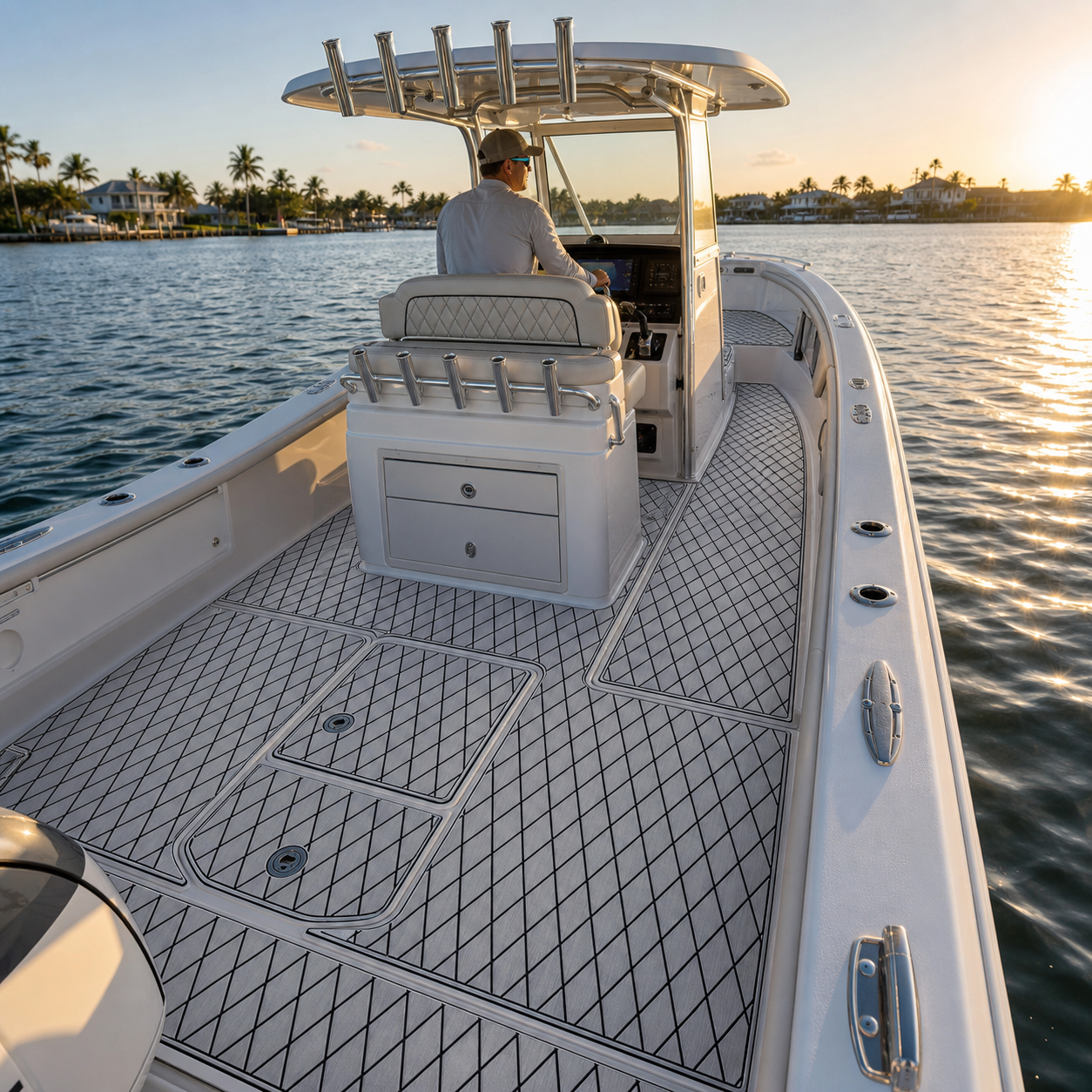
Replacing a tired boat deck can feel like a bigger project than it needs to be. Traditional marine carpet holds dirt and fishy odors, molded non-skid can be hard underfoot, and real teak looks beautiful but demands a serious budget and ongoing care. For many recreational boat owners, EVA foam boat flooring offers a practical middle ground: a cleaner look, a cushioned feel, and a DIY-friendly way to refresh the deck.
But is it actually worth installing on your boat? The honest answer depends on how you use the boat, the condition of the deck, and how carefully you prepare the surface. This guide explains where EVA boat flooring performs well, what tradeoffs to expect, and what to check before ordering marine deck sheets.
EVA foam is a strong choice for boat owners who value comfort, grip, easy cleanup, and a custom-looking finish without the cost of real teak. It is not a shortcut around deck repairs, and installation quality matters as much as the material.
What Is EVA Foam Boat Flooring?
EVA stands for ethylene-vinyl acetate, a flexible closed-cell foam used in many marine deck products. The surface can be embossed, grooved, or cut into patterns that add texture and visual depth. Common styles include faux teak planks, diamond patterns, brushed finishes, and camo designs.
Most DIY marine deck sheets use a pressure-sensitive adhesive backing. You trim the sheet to fit the deck area, test the layout, remove the backing gradually, and press it onto a clean, smooth surface. The foam can be used on areas such as casting decks, cockpit floors, swim platforms, helm stations, cooler tops, and hatch lids, provided the underlying surface is suitable.
Unlike a loose mat, properly installed self-adhesive boat flooring becomes part of the deck layout. Seams, hatch outlines, and pattern direction all affect the finished appearance, so measuring and dry-fitting deserve as much attention as the actual sticking step.
Why Boat Owners Choose EVA Marine Decking
More comfort during long days on the water
Fiberglass and aluminum decks can feel unforgiving after hours of standing at the helm or working a fishing spot. EVA foam adds a cushioned layer between your feet and the hard deck. That softer feel is especially noticeable when you are barefoot, kneeling to handle gear, or shifting your stance throughout a full day of fishing.
Consider a center-console owner who spends the morning moving between the helm, livewell, and forward casting deck. A cushioned surface will not eliminate fatigue, but it can make those repeated hours of standing more comfortable than a bare hard deck.
Useful texture in wet areas
Textured EVA creates more surface contact than a smooth deck and can help improve footing when the surface is wet. Diamond and grooved patterns are popular around fishing work areas, boarding points, and cockpit walkways for this reason.
No boat flooring can make a wet deck completely slip-proof. Fish slime, sunscreen, fuel, loose tackle, and standing water still need to be cleaned promptly. Think of textured EVA as one part of a safer deck setup, along with good drainage, clear walkways, and sensible footwear.
A major visual upgrade without real teak cost
A faded or mismatched deck can make the whole boat feel older. Faux teak boat flooring adds warm plank lines, while gray-and-black diamond flooring gives a more modern sport-fishing look. Camo can suit hunting and shallow-water boats, and lighter gray finishes can keep a compact deck visually open.
The transformation is often most effective when the color works with the boat rather than fighting it. A white center console, for example, can look crisp with light gray foam and dark grooves. A black-and-red bass boat may suit a darker diamond pattern with a restrained accent color.
Simpler cleanup after normal boating use
Marine carpet can trap sand, hooks, crumbs, scales, and odors deep in its fibers. Closed-cell EVA does not behave like carpet, so surface debris is generally easier to see and remove. For routine cleaning, boat owners can usually start with fresh water, mild soap, and a soft brush.
Stains are easier to manage when you clean them early. Avoid assuming that “marine-friendly” means maintenance-free. Harsh solvents, aggressive pressure washing, and stiff wire brushes can damage foam or shorten its useful life.
The Tradeoffs You Should Understand
EVA foam boat flooring is practical, but it is not the right answer for every deck or owner. A useful buying decision includes the drawbacks as well as the benefits.
- Surface preparation is critical. Adhesive will not compensate for dust, wax, oil, peeling paint, loose carpet glue, or a damp deck.
- Dark colors can become warmer in direct sun. If your boat sits uncovered in a hot climate, compare samples in actual sunlight before choosing black or deep brown.
- Sharp objects can cut foam. Knives, exposed hardware, dragged coolers, and careless tool use can leave marks.
- Edges and seams need planning. Poorly positioned seams can collect dirt or become vulnerable in high-traffic areas.
- It will not repair structural problems. Soft decking, cracks, trapped moisture, corrosion, and damaged fiberglass must be corrected before covering the surface.
Also consider how the boat is stored. A covered family pontoon used on weekends faces different exposure than a guide boat that stays outdoors and sees heavy daily traffic. Matching the material and installation plan to the real use case is more important than choosing by appearance alone.
Which Boats and Deck Areas Are a Good Match?
EVA marine flooring is versatile because sheets can be trimmed around consoles, hatches, seat bases, and storage compartments. It is commonly considered for:
- Bass and fishing boats: added comfort on casting decks and easier surface cleanup after a trip.
- Pontoons and family boats: a softer feel around seating and social areas, with style options that complement upholstery.
- Jon boats and skiffs: a straightforward DIY boat flooring upgrade for flat aluminum or fiberglass sections that are properly prepared.
- Center consoles and speedboats: a clean, fitted look around the helm, cockpit, and walkways.
- Kayaks and small craft: targeted pads where standing, kneeling, or gear contact is common.
Not every square inch needs foam. Some owners get the best result by focusing on high-value zones: the helm pad, forward casting deck, swim platform, or the area where passengers board. A smaller first project also lets you learn how the material cuts and adheres before tackling an entire deck.
How to Choose the Right EVA Boat Flooring
Start with the way you use the boat
A fishing boat needs practical texture and easy cleanup. A family pontoon may prioritize comfort and a coordinated faux teak design. A restored runabout may need a classic appearance without the weight and upkeep of timber. Write down the top two outcomes you want before comparing colors.
Compare texture, color, and pattern scale
Texture affects both appearance and everyday use. Deep grooves create strong visual definition but may take more brushing to clean. Fine brushed surfaces look subtle and modern. Diamond patterns suit active decks, while faux teak lines can make a boat feel longer and more refined when aligned correctly.
Whenever possible, view a sample on the actual boat. Look at it in midday sun and late-afternoon light, next to the gelcoat and upholstery. Online photos are useful for inspiration, but screens can shift color.
Check the complete installation system
Thickness and foam density influence feel and durability, but they should not be considered in isolation. Review the adhesive backing, surface compatibility, edge design, sheet dimensions, and care instructions. Confirm that your deck is smooth enough for full adhesive contact.
Focean offers EVA foam marine deck sheet options in styles such as faux teak, diamond, grooved, and camo finishes. The useful starting point is not simply “Which design looks best?” but “Which design fits my boat, my climate, and the way I use the deck?”
Planning a DIY Boat Deck Upgrade
A careful installation starts before the backing paper comes off. Use this sequence to reduce avoidable mistakes:
- Inspect the deck. Repair damage and resolve moisture, corrosion, or loose coatings.
- Remove old residue. Carpet adhesive, wax, grease, and silicone can prevent reliable bonding.
- Measure each section. Include hatches, drains, hinges, fasteners, and access points.
- Create templates when needed. Paper or clear plastic templates help with irregular shapes.
- Dry-fit everything. Check pattern direction, gaps, seams, and hatch movement before peeling.
- Apply gradually. Peel a small section of backing at a time and press from the center outward to limit trapped air.
- Finish the edges carefully. Use a sharp blade and change blades when cuts start to drag.
Imagine upgrading an older bass boat over a weekend. The tempting approach is to start cutting as soon as the carpet comes out. The better approach is to spend the first session removing adhesive, checking hatch clearance, and making templates. That extra preparation is what makes the finished deck look intentional instead of improvised.
Frequently Asked Questions
Is EVA foam boat flooring waterproof?
Closed-cell EVA is well suited to wet marine environments because it does not absorb water like carpet. However, the entire installation still depends on sealed deck surfaces, sound adhesive contact, sensible edge placement, and proper drainage. Water should not be allowed to hide an existing deck problem.
Can I install self-adhesive boat flooring over old carpet?
No. Remove the carpet and its adhesive residue first. The foam backing needs a clean, stable, smooth surface. Installing over fabric or loose residue creates an unreliable bond and an uneven finish.
How long does EVA boat flooring last?
There is no single lifespan that applies to every boat. Sun exposure, climate, storage, cleaning methods, traffic, installation quality, and contact with sharp gear all matter. Covered storage, prompt cleaning, and careful use can help preserve the surface.
Can EVA foam be removed later?
Yes, but removal can require patience. The process may involve gentle heat, controlled lifting, and an adhesive remover that is compatible with the underlying deck. Test any chemical in a hidden area before wider use.
So, Is EVA Foam Boat Flooring Worth It?
For many recreational boat owners, yes. EVA foam boat flooring can deliver a noticeable improvement in comfort, traction, cleanup, and appearance without turning the project into a full custom teak refit. It is particularly attractive for owners who enjoy DIY upgrades and are willing to measure carefully.
The practical takeaway is simple: choose the style for your real boating routine, inspect the deck before covering it, and treat preparation as part of the installation—not as an optional first step. When those basics are handled well, an EVA boat deck makeover can make an older boat feel cleaner, more comfortable, and more personal.
Ready to plan your deck upgrade? Explore Focean boat flooring options and compare faux teak, diamond, grooved, and camo finishes for your next on-the-water project.
Share: