
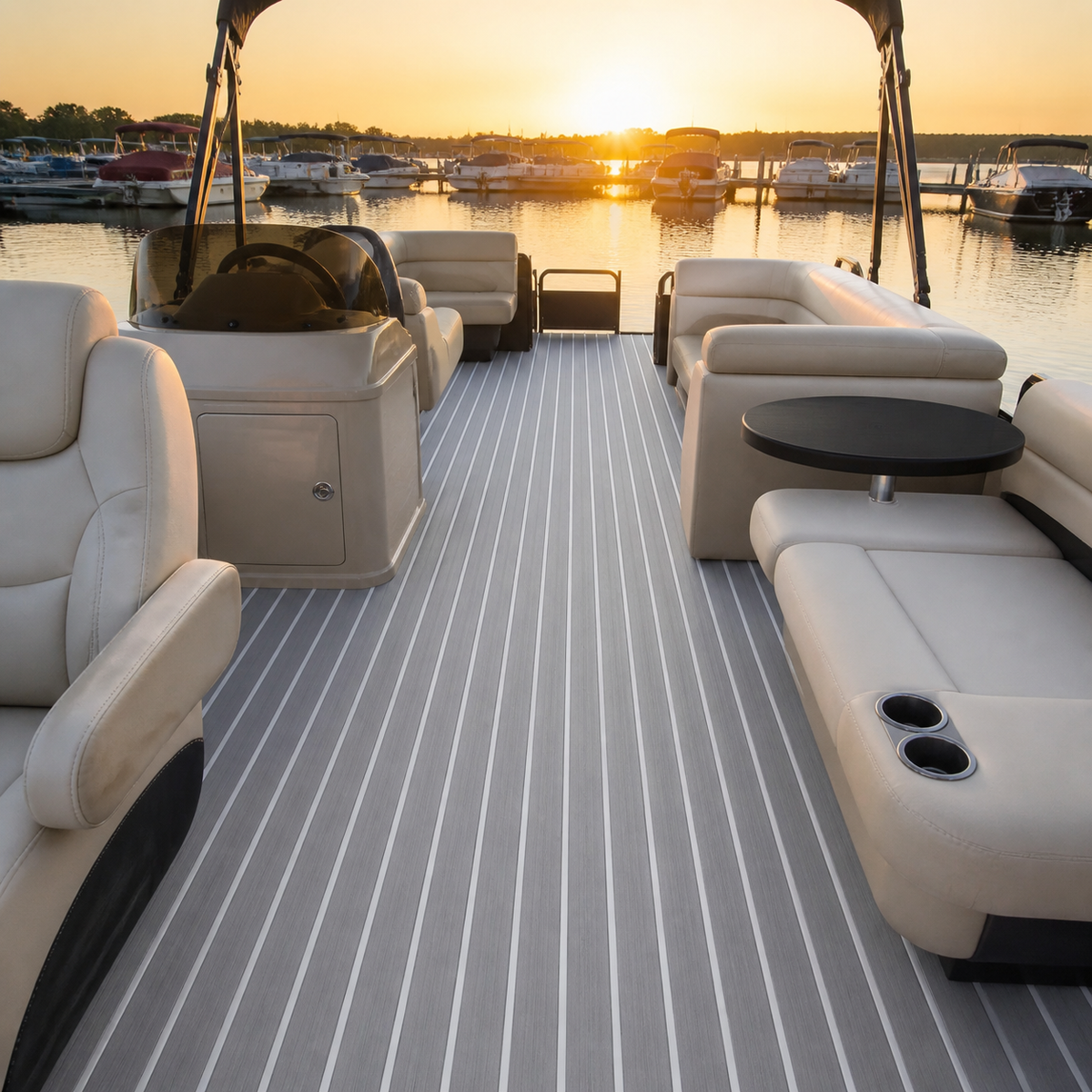
Choosing between EVA foam and marine carpet for a pontoon deck is less about finding a universal winner than matching the surface to the way the boat is actually used. A quiet sunset cruise, a full family day, and a fishing trip all put different demands on gates, seating areas, coolers, tables, and the open center aisle. The best decision starts with those zones rather than with a material name.
This guide compares the two options from a consumer planning perspective. It does not assume that every EVA product or every carpet system is built the same way. Before buying, confirm the construction, backing, installation instructions, cleaning guidance, and current terms for the exact product under consideration.
Why pontoon decks need a zone-by-zone decision
A pontoon has a broad, social floor plan. People move between the bow gate, helm, lounge seating, table, storage compartments, and stern access throughout the day. That creates several distinct questions:
- Where will wet feet, sunscreen, food, bait, or fish residue appear most often?
- Which areas must open cleanly around hatches, seat bases, gates, and hardware?
- Will the boat stay covered, live in a slip, or travel on a trailer?
- How important are a softer feel, a tailored visual pattern, and easy spot cleaning?
- Is the project a full-deck replacement or a targeted refresh of selected zones?
Answering those questions first prevents an attractive material from being forced into a layout or maintenance routine that does not suit the owner.
EVA foam and marine carpet at a glance
| Decision factor | EVA foam | Marine carpet |
|---|---|---|
| Visual character | Defined panels, routed lines, or surface patterns can create a structured deck layout. | A continuous textile surface can give the deck a familiar, uniform appearance. |
| Feel underfoot | Typically selected when owners want a cushioned foam surface. | Typically selected when owners prefer a soft textile feel. |
| Cleaning approach | Usually treated as a surface-cleaning task, subject to the maker's instructions. | Debris can settle into fibers, so vacuuming, rinsing, and drying may matter more. |
| Layout planning | Panel seams, pattern direction, and edge spacing need deliberate planning. | Large continuous sections still need careful fitting around furniture and openings. |
| Replacement strategy | Individual planned panels may support a zone-based project, depending on the system. | Replacement scope depends on how the carpet is installed and joined across the deck. |
These are planning tendencies, not performance guarantees. Product construction, installation quality, exposure, and maintenance can change the result.
Where EVA foam may fit a pontoon layout
EVA foam often appeals to owners who want visible structure in the floor design. A striped direction can guide the eye along the center aisle, while panel boundaries can follow seat bases and access openings. That makes the planning stage especially important: an off-center line or a narrow sliver beside a gate can remain visually obvious after installation.
It can also suit owners who prefer to clean the deck as a defined surface rather than manage textile fibers. That does not make care automatic. Spills should still be addressed promptly, cleaners should be compatible with the selected product, and dirty water should not be allowed to collect around edges or hardware. Traction also changes with water, residue, wear, and footwear, so no deck surface should be treated as slip-proof.
For a retrofit, inspect the existing substrate rather than assuming a new layer will hide every problem. Old adhesive, raised fasteners, soft sections, uneven repairs, or trapped contamination can affect fit and appearance. Follow the product maker's preparation requirements and resolve substrate concerns before installation.
Where marine carpet may fit a pontoon layout
Marine carpet remains familiar to many pontoon owners because it creates a continuous, soft-looking deck. It may suit a boat used mainly for relaxed cruising when the owner prefers a textile surface and is comfortable with its cleaning and drying routine.
The important question is what happens after a messy day. Sand, crumbs, plant fragments, and fishing debris can work into fibers. Owners should consider how easily they can vacuum, rinse, and fully dry the deck in their storage conditions. A boat kept uncovered in a humid slip presents a different maintenance situation from one that is trailered home and opened for drying.
Carpet fitting also deserves careful planning. Seat bases, consoles, gates, deck fittings, and hatch openings interrupt the broad floor. A neat continuous appearance depends on accurate cutting and secure finishing at those transitions. Ask the supplier or installer how seams, edges, and removable components will be handled before work begins.
Compare the materials by pontoon zone
Bow and side gates
These are high-traffic transitions where shoes bring aboard water and grit. Check door clearance, edge placement, and whether the chosen surface changes how a gate swings or latches. A clean termination is more important than extending material into every narrow corner.
Helm
The helm contains a seat pedestal, console base, wiring access, and sometimes removable panels. Plan around service access and foot placement. A visually aligned foam pattern can frame the area, while carpet can create a continuous field; either choice must preserve access to hardware.
Lounge and table areas
Food, drinks, sunscreen, and chair traffic make cleaning habits central here. Think through the owner's real response to a spill: quick surface cleanup, vacuuming later, rinsing at the dock, or a deeper seasonal reset. The material that fits the routine is often the better long-term choice.
Stern and swim access
Wet boarding makes drainage and contamination control important. Inspect how water moves, where it can collect, and how the surface ends near ladders or thresholds. Keep the area clean and use normal caution because wet surfaces can still be slippery.
Fishing positions
For fishing-focused pontoons, consider hooks, bait, fish residue, coolers, and repeated gear movement. A textile surface and a foam surface will call for different cleanup habits. Owners should weigh that routine more heavily than showroom appearance.
Five questions that usually settle the choice
- What creates the most mess? Family meals, dogs, fishing, sandbar visits, and routine cruising leave different residue.
- How does the boat dry? Storage cover, airflow, climate, and dock conditions affect maintenance.
- Which access points must remain removable? Mark hatches, fasteners, seat bases, and service panels before choosing a layout.
- Is the owner comfortable with precise templating? Patterned foam rewards careful alignment; broad carpet sections also demand accurate cuts.
- What does the exact product require? Confirm substrate compatibility, preparation, installation, cleaning, and removal guidance for the selected option.
Could a mixed approach work?
Some owners may consider different surfaces in different zones, but a mixed plan should look intentional. Random patches can create awkward transitions and extra edges. If combining materials, define clear boundaries at natural breaks such as a threshold, furniture base, or separate platform. Check thickness transitions, door clearance, drainage, and how the edges will be finished.
A simpler alternative is to choose one main deck material and solve special zones with removable accessories that do not interfere with access or drainage. The right answer depends on the boat and the selected products, so confirm compatibility rather than improvising during installation.
Practical takeaway: make a one-page deck brief
Before requesting a quote or ordering material, create a one-page brief with:
- a top-down sketch of the deck;
- photos of gates, hatches, seat bases, helm access, and stern transitions;
- a list of the three messes that occur most often;
- the normal storage and drying conditions;
- the preferred cleaning routine;
- areas that must remain removable; and
- questions about the exact product's backing, installation, care, and current terms.
This brief turns a vague material preference into a practical pontoon-flooring decision.
Frequently asked questions
Is EVA foam always better than marine carpet on a pontoon?
No. EVA foam may appeal to an owner who wants defined panels and surface-focused cleaning, while marine carpet may suit someone who prefers a continuous textile feel. The boat's use, storage, substrate, and maintenance routine should decide.
Can either material be installed over an old pontoon floor?
Do not assume so. Identify the substrate and any old adhesive, moisture damage, loose fasteners, soft areas, or contamination. Follow the exact product's preparation and compatibility instructions.
Which option is safer when wet?
No flooring should be described as universally safe when wet. Texture may support traction, but water, sunscreen, dirt, wear, and footwear all affect footing. Keep the deck clean, use handholds, and move carefully.
Should I replace the whole deck at once?
Not necessarily. Start by mapping wear, access needs, and visual boundaries. A zone-based project may be possible for some systems, but confirm how seams, edges, and future replacement will work before ordering.
Focean offers current boat-flooring options for owners comparing deck layouts and surface styles. Review the exact listing under consideration, verify its specifications and instructions, and contact Focean with product-specific questions before ordering.
Share:
How to Plan EVA Foam Flooring Installation for a Wake Boat Cockpit
Comfortable Center-Console Boat Flooring: Plan Every Standing Zone