
EVA Foam vs. Bare Aluminum for Work Skiffs: A Practical Deck Guide
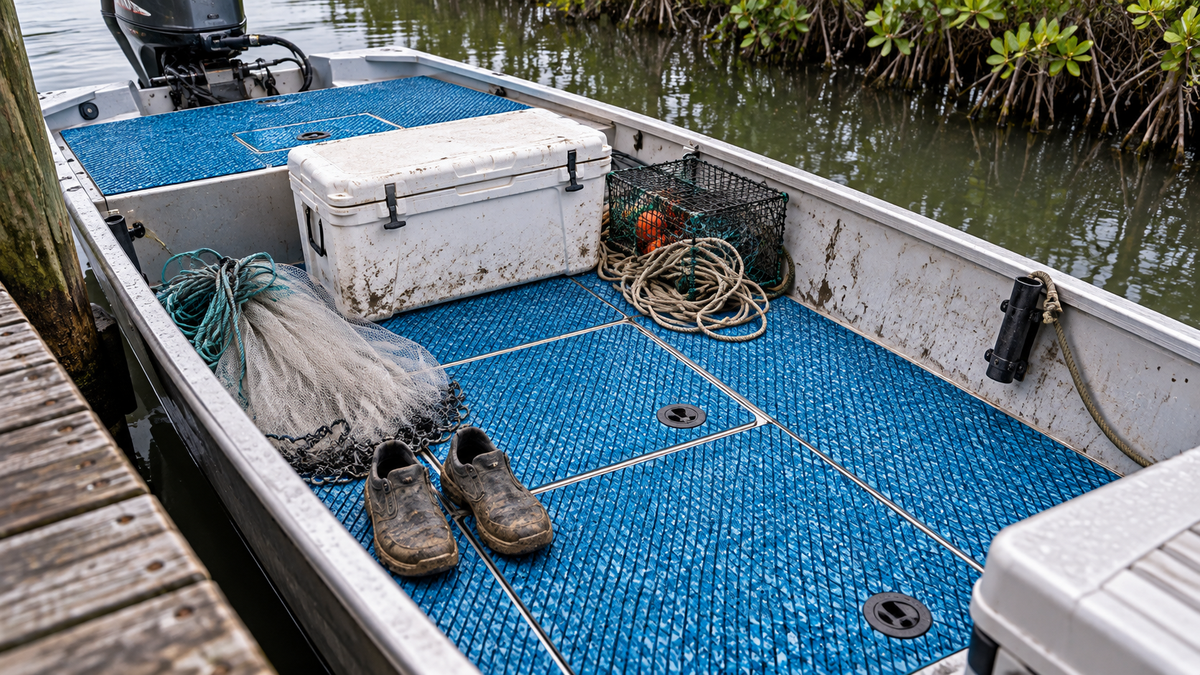
A small aluminum work skiff often earns its keep through wet launches, muddy boots, rope, nets, traps, coolers, and gear that moves several times in one trip. When the deck is bare aluminum, every surface remains visible and direct. Adding EVA foam sheet flooring changes how the deck feels and how it must be cleaned, inspected, and repaired. Neither choice is automatically right for every boat.
This guide compares the two options as systems rather than treating flooring as a cosmetic upgrade. It is written for owners deciding whether to cover a stable deck surface, not for bridging exposed ribs or replacing a structural floor. Before ordering or cutting anything, confirm the boat builder’s restrictions, the condition of the exact substrate, and the current instructions for the material being considered.
Begin with the work the skiff actually does
Write down a normal trip from launch to cleanup. Mark where a person first steps aboard, where wet rope lands, where a net or trap is set down, where a cooler slides, and where muddy footwear collects debris. Include the route used to reach the outboard, battery, fuel system, drains, inspection points, and removable floor sections. A deck choice should support those repeated movements without hiding a maintenance need.
A recreational skiff that carries light gear has a different decision than a working boat that handles abrasive equipment or organic debris. The related aluminum jon boat flooring buyer’s checklist offers a broader way to map ribs, benches, fasteners, drainage, and removable gear before comparing materials.
What keeping a bare aluminum deck preserves
Bare aluminum keeps the substrate visible. Corrosion, loose fasteners, cracks, dents, worn coatings, and standing water can be easier to notice because there is no covering above them. Cleanup can also be direct when the boat builder permits the chosen method: remove gear, collect debris, wash in a controlled direction, and inspect the metal as it dries.
That simplicity has tradeoffs. Surface temperature, hardness underfoot, noise from dropped gear, and the feel of a wet or dirty deck may matter during a long workday. The exact experience depends on weather, finish, footwear, contaminants, and boat construction. Do not turn a general observation into a universal performance promise; evaluate the actual boat in the conditions where it is used.
What an EVA foam sheet layout changes
A fitted EVA foam layout adds a separate surface over selected areas of the deck. That can change contact feel, visual organization, and the way working zones are defined. A contrasting panel boundary can help identify a hatch, cooler position, standing area, or clear route through the boat. Texture may support a traction-focused plan, but water, mud, fish residue, wear, footwear, and maintenance still affect footing.
The covering also adds edges, seams, and an interface with the substrate. Those details must be planned around drains, fasteners, inspection points, moving lids, and areas that need to dry. Compatibility, preparation, placement, and waiting time are product-specific. Confirm them for the exact sheet and the exact aluminum finish rather than relying on a generic installation routine.
Compare heat and contact comfort by zone
Do not ask only which material feels better in a showroom. Map the places where someone stands or kneels for meaningful periods: the tiller or console position, trap or net handling area, bow work zone, dock-side boarding point, and space beside the cooler. Also note areas that receive direct sun and areas shaded by benches or gear.
Test the existing deck safely under representative conditions before deciding what needs coverage. A full-deck project may be unnecessary if only two stable standing zones cause discomfort. Conversely, isolated pads can create extra edges in a heavy gear route. The useful comparison is between complete zone plans, not between two small material samples viewed away from the boat.
Compare cleanup around real contaminants
List what actually reaches the floor: sand, silt, bait residue, fish scales, plant material, spilled drinks, fuel-related contamination, or mud from a bank launch. Bare metal and textured sheet flooring collect debris differently. Grooves and panel edges need deliberate brushing and rinsing, while seams and equipment footprints deserve close inspection after dirty work.
Use only cleaning products and methods approved for the exact boat finish and flooring. Remove loose debris before adding water, work in small sections, and keep dirty liquid from being pushed into an inaccessible hull space. The low-water jon boat cleaning guide explains a controlled routine for boats that may not drain freely.
Keep drainage and drying visible
Trace the deck’s water path while the boat is empty. Identify gutters, low points, limber paths, drain openings, removable plugs, and the places where a cooler or trap can redirect water. A bare deck makes that route easier to see, but gear can still block it. A sheet layout must preserve the same functional route and keep important openings recognizable.
Plan how both the top surface and the deck around panel boundaries will be dried and inspected. Do not cover uncertain corrosion, loose coating, trapped moisture, or a flexible area in the hope that flooring will solve it. Resolve the substrate issue first, then decide whether that zone belongs in the project.
Account for traps, nets, rope, and movable gear
Working equipment can drag, pivot, and concentrate force at small points. Mark the normal landing area for a trap, net frame, anchor, battery box, fuel tank, and cooler. Check whether each item must slide, be lifted, or remain secured. A panel edge placed across that route may receive repeated contact; bare aluminum may show wear directly but can also let hard objects move differently.
Dry-fit the full working arrangement before committing to a flooring layout. Load clean versions of the usual gear, open every lid, reach the outboard controls, and walk the boarding route. The test should reveal whether a proposed seam, decorative line, or separate pad conflicts with the job the deck must perform.
Compare inspection and service access
Inspection access is one of the strongest reasons to avoid an oversized one-piece layout. Keep fasteners, identification information, drains, wiring routes, fuel-system access, removable floor panels, and builder-designated service points available. Template moving lids separately and test their full sweep with surrounding pieces in place.
Bare aluminum usually requires no extra step to see the substrate. With a covering, create a labeled panel map and photograph the deck before placement. Those records make later inspection more deliberate and help a repair stay within an existing functional boundary.
Compare project scope, not just material price
The bare-deck option may still require correction of corrosion, loose coating, sharp damage, or drainage problems. The sheet-flooring option adds measuring, full-size templates, orientation control, careful cutting, complete dry fitting, substrate preparation, placement, and later edge inspection. Include tools, workspace, weather window, access downtime, and the cost of a cutting error when comparing the two paths.
If the boat has exposed ribs rather than a stable floor, do not treat decorative sheet material as structure. Determine whether a proper floor panel is required and obtain suitable guidance. The jon boat installation guide shows how to preserve ribs, benches, hatches, removable sections, fasteners, and drainage during a sheet-flooring project.
Use a decision matrix for each deck zone
Score each zone separately rather than forcing one answer across the boat. Useful columns include substrate condition, water exposure, contamination, standing time, gear abrasion, required access, drainage importance, cleaning method, and repair boundary. Then compare three plans: keep it bare, cover only selected stable zones, or create a coordinated multi-panel layout.
A zone should stay bare when visibility, direct service access, uncertain substrate condition, or heavy equipment contact outweighs the benefit of a covering. A zone may suit sheet flooring when the substrate and exact product are compatible, the panel can be cleaned and inspected, and its boundaries support rather than interrupt the work route. Document why each choice was made.
Questions to settle before ordering
- What exact substrate and finish will receive the material?
- Are corrosion, loose coating, dents, moisture, or old adhesive present?
- Which drains, fasteners, labels, hatches, and service points must remain open?
- Where do traps, nets, rope, coolers, batteries, and fuel equipment sit or move?
- Can every proposed panel be fully dry-fitted with the normal gear aboard?
- What do the boat builder and exact flooring instructions require for compatibility, preparation, placement, and care?
FAQ
Should every exposed aluminum surface be covered?
No general rule supports that approach. Keep surfaces uncovered when they need direct inspection, drainage, movement, or service access, and confirm compatibility before covering any stable deck zone.
Can EVA foam sheet flooring go directly over ribs?
Do not assume it can. Exposed ribs and unsupported spans are structural questions. Sheet flooring should not be represented as a replacement for a proper floor panel.
Is a partial layout easier to maintain?
It can be, if the boundaries follow real work and access zones. Poorly placed small pads can add vulnerable edges or interrupt cleanup, so test the entire gear and walking route during the dry fit.
Practical takeaway
The choice between EVA foam sheet flooring and a bare aluminum work-skiff deck is really a choice between two maintenance and access systems. Map the boat’s work cycle, contaminants, water route, gear movement, standing zones, and service points. Keep the deck bare where visibility and direct access matter most; consider a fitted covering only where the substrate, boundaries, cleaning plan, and exact product instructions all support it.
Focean offers sheet-material options for owners evaluating a deck project. Contact Focean with clear photos of the substrate, finish, ribs or floor panels, drains, hatches, and normal gear layout to ask product-specific compatibility, preparation, and placement questions before ordering or cutting.
Share:
How to Install Jon Boat Flooring Around Ribs and Benches
Traction-Focused Deck Boat Flooring for Swim Routes