
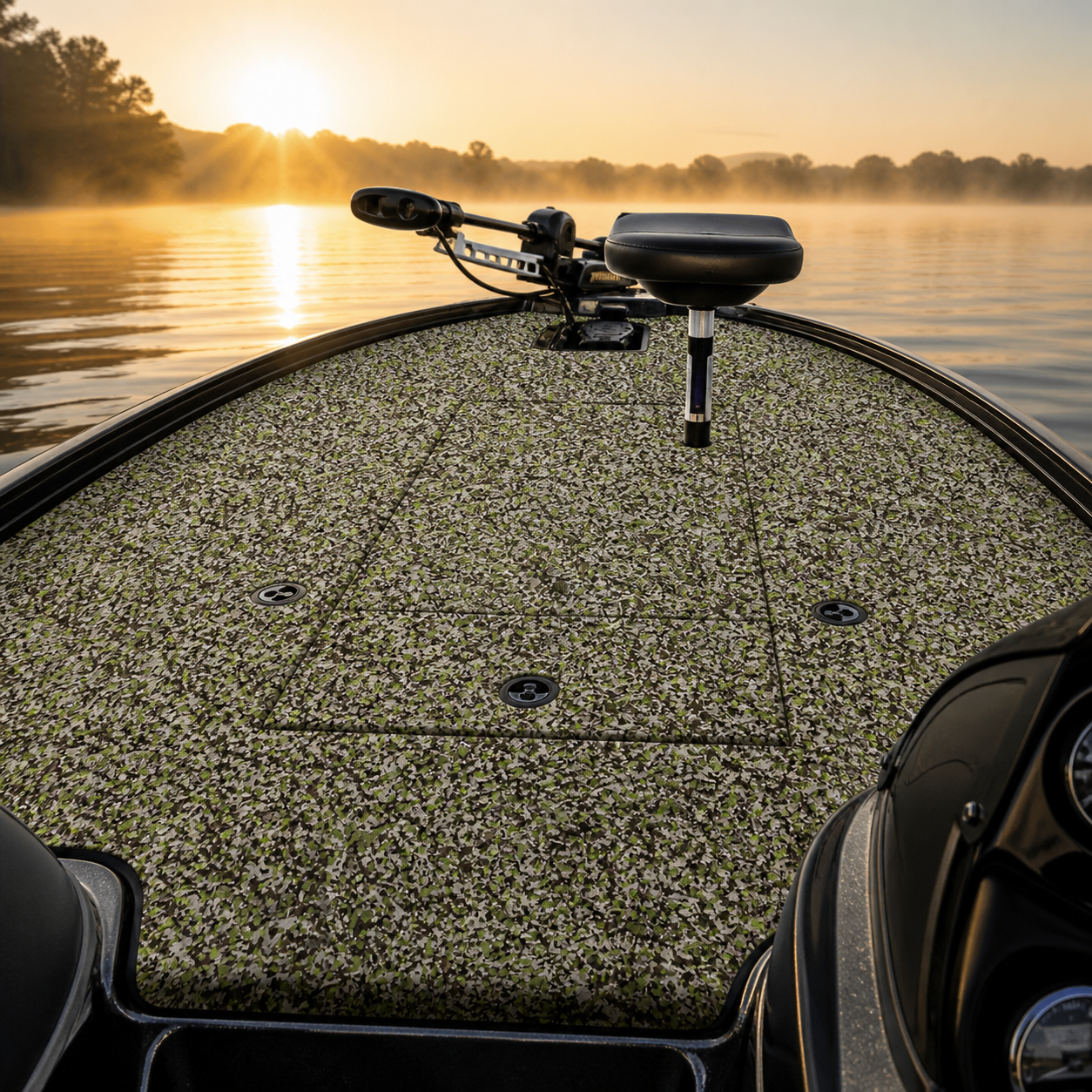
A bass boat casting deck gathers a very specific mix of mess: lake water, dried spray, fish residue, plant fragments, sand, soil, sunscreen transfer, and whatever arrives on shoes or tackle boxes. The surface may look simple from a distance, but cleaning becomes more detailed around hatch gaps, pedestal bases, trolling-motor hardware, drains, and the edges of fitted flooring panels.
This guide explains a careful routine for cleaning bass boat flooring without treating the deck as one uninterrupted slab. It is written as general consumer education, not as a substitute for the instructions supplied with a particular boat, flooring product, adhesive system, or cleaner. Before starting, check the guidance for every surface involved and test any permitted cleaner in an inconspicuous area.
Begin with a dry inspection
Cleaning is easier when you know where dirt is collecting. With the boat stable and the deck cool enough to work on comfortably, remove loose equipment and inspect the casting deck from several angles. Look along flooring edges, around hatch lids, beneath removable seats, and beside hardware. Open each hatch so you can see the gaps and drainage routes that disappear when the lid is closed.
Separate ordinary surface dirt from anything that needs special attention. A few dry leaves call for a different approach than oily residue, fish waste, or an unknown stain. If a substance is unfamiliar, avoid guessing at a chemical treatment. Identify it first and consult the applicable care instructions.
Also check for lifted edges, cuts, loose fittings, damaged hatch seals, or blocked drains. Cleaning should not conceal a maintenance issue. Photograph anything unusual before you begin so you can compare the area afterward or discuss it with the appropriate supplier or service professional.
Clear the deck before adding water
Remove tackle trays, coolers, landing nets, portable electronics, seat posts, and other movable items. Secure hooks and lures before handling gear. Debris hidden beneath a box can scratch, stain, or remain wet after the visible deck has dried.
Use a soft brush, handheld broom, or vacuum method that the relevant instructions allow to lift loose particles. Work from the center of each panel toward an open area rather than pushing debris into hatch gaps. A smaller soft brush can help around pedestal bases and hardware, but avoid forcing bristles under panel edges.
Dry removal matters because loose grit mixed with water becomes harder to control. It can migrate into seams, collect around latches, or be dragged repeatedly across the surface during washing.
Choose the mildest suitable cleaning method
Do not assume that a familiar household cleaner belongs on marine flooring. Confirm the permitted cleaner, dilution, tools, contact time, and rinsing method for the exact flooring and adjacent boat surfaces. Product categories vary, and a method that works on one surface may discolor, soften, dull, or leave residue on another.
If the applicable guidance allows a mild cleaning solution, prepare only what you need and keep it clearly labeled during the job. Never mix cleaning products. Avoid experimenting with strong solvents, abrasive powders, stiff wire brushes, or pressure settings that have not been approved for the surface.
Spot-test the planned method in a low-visibility location. Let the area complete the instructed cleaning and drying cycle before judging the result. Check both the flooring and any border, sealant, fiberglass, metal, or plastic that the solution touched.
Wash the casting deck in small sections
Working in manageable sections helps prevent cleaner and dirty water from drying on the deck. Lightly wet or prepare the section only as directed. Apply the permitted solution with an approved cloth or soft brush, then use gentle, overlapping passes that follow the surface texture.
Give extra attention to the places where feet pivot or gear rests, but do not scrub one spot aggressively just because it looks darker. Repeated heavy abrasion can create a visible patch. If normal cleaning does not remove a mark, stop and reassess the substance and the product guidance.
Rinse or wipe away residue as instructed before moving to the next area. Keep dirty runoff away from open storage compartments, wiring access, electronics, pumps, and tackle. Do not flood the deck to compensate for incomplete brushing; controlled cleaning is usually easier to inspect and dry.
Detail hatches, pedestal bases, and hardware
Bass boat decks contain many boundaries, and those boundaries deserve their own pass.
- Hatch lids: Clean the top surface with the lid closed, then open it and remove debris from the perimeter without pushing water into the compartment.
- Hatch gaps: Use a suitable small tool or cloth to lift debris. Preserve the clearance needed for the lid to move and latch normally.
- Pedestal bases: Work around the fitting rather than soaking it. Confirm that drainage openings and fasteners remain visible.
- Trolling-motor area: Keep cleaning solution away from electrical connections and follow the equipment maker’s instructions around wiring, plugs, and controls.
- Panel edges: Wipe toward the exposed surface instead of driving grit or liquid beneath an edge.
- Drains and channels: Remove visible debris and confirm that water has a clear route without using an unapproved tool or chemical.
Inspect latch operation and hatch travel after detailing. A clean appearance is not enough if debris, a shifted mat edge, or a misplaced item interferes with access.
Handle fish residue and stains promptly
Fresh residue is generally easier to address than material that has dried through a hot day. Remove solids carefully, contain them, and begin the approved cleaning process as soon as practical. Avoid grinding residue into textured areas with a towel or shoe.
For a remaining stain, identify what caused it before escalating the cleaner. Oil, rust-colored transfer, plant material, dye, and food spills do not all respond to the same method. Use only a treatment supported by the exact surface instructions, and repeat a gentle approved process before considering anything stronger.
Odor can indicate material trapped in a seam, hatch channel, drain, or nearby compartment rather than a problem on the visible flooring. Trace the source instead of masking it with fragrance.
Rinse carefully and let every boundary dry
Remove cleaning residue using the method specified for the surface. Residue left in texture can attract more dirt and may change how the deck feels underfoot. Continue until the surface no longer shows dirty runoff or cleaner film, without oversaturating edges and compartments.
Use clean towels, ventilation, and normal drainage to help the deck dry. Open hatches when conditions and the boat’s instructions make that appropriate, and keep the boat attended while compartments are open. Check shaded areas around consoles, seat bases, and closed lids because they may dry more slowly than the exposed casting deck.
Before replacing gear, confirm that the deck, hatch perimeters, and storage spaces are dry enough for the intended use. Returning a damp tackle bag or cooler to the same spot can undo the work and trap moisture.
Build a simple post-trip routine
A short inspection after each outing can reduce the need for aggressive cleaning later. Remove loose debris, deal with fresh spills, clear drainage paths, and let wet equipment dry outside storage compartments when practical. Keep hooks, weights, and sharp tools in containers so they do not drag across the deck.
Record the cleaner and method used for the flooring, especially if several people maintain the boat. Keep the current care instructions with the boat’s records. When flooring, hardware, or equipment changes, review the routine again rather than assuming the old method still applies.
Footing depends on more than texture. Water, fish residue, sunscreen, loose tackle, footwear, wear, and boat motion can all affect traction. Good housekeeping, clear walkways, handholds, suitable footwear, and careful movement remain important on any wet deck.
A practical bass boat deck-cleaning checklist
- Read the current care instructions for the exact flooring and nearby surfaces.
- Remove tackle, seats, coolers, and loose debris before washing.
- Inspect hatches, drains, edges, pedestal bases, and trolling-motor hardware.
- Spot-test an approved cleaner and tool in a discreet area.
- Clean in small sections without flooding compartments or electronics.
- Detail seams and access points without forcing debris beneath edges.
- Rinse or wipe away residue according to the applicable instructions.
- Let the deck and storage boundaries dry before replacing gear.
Frequently asked questions
Can I pressure-wash bass boat flooring?
Use pressure equipment only if the exact flooring, installation system, and boat guidance permit it and specify an appropriate method. Otherwise, choose an approved lower-impact process. Uncontrolled pressure can drive water and debris into edges, hatches, fittings, or electrical areas.
What should I use around hatch gaps?
Use a soft cloth, brush, or other tool allowed by the relevant instructions. Lift debris out of the gap rather than pushing it deeper, and protect the hatch seal, latch, hinge, and surrounding panel edges.
How should I clean around the trolling motor?
Disconnect or secure equipment as directed by its manufacturer, avoid wetting electrical connections, and follow the motor and boat instructions. Clean the nearby deck with controlled moisture rather than spraying across wiring and controls.
When should a stained area be inspected instead of scrubbed again?
Pause when the cause is unknown, the approved method has not helped, the surface changes appearance, an edge is loose, or damage is visible. More force can make diagnosis harder. Document the area and seek product-specific guidance.
Practical takeaway
Cleaning bass boat flooring is mostly about respecting the details: remove dry grit first, use the mildest approved method, work in sections, protect access points, and dry the boundaries before loading gear. The casting deck should remain easy to inspect, drain, open, and service after it looks clean.
If you are comparing replacement flooring or planning a future deck update, review Focean’s current boat flooring listings for the exact option under consideration. Confirm the listed specifications, compatibility, installation method, care instructions, and current terms for that SKU, and contact Focean with questions before ordering.
Share:
Boat Flooring for Bowriders: A Practical Buyer’s Guide
How to Plan EVA Foam Flooring Installation for a Wake Boat Cockpit